Work Hours
Monday to Friday: 7AM - 7PM
Weekend: 10AM - 5PM

Wood grain vinyl flooring, PVC flooring, and other flexible decorative floor materials need more than a straight cut. Plank layouts, doorways, columns, wall edges, and custom installation zones often require precise contours, notches, slots, and repeatable shapes. A CNC oscillating knife cutting machine gives flooring manufacturers, converters, and sample makers a digital way to turn material sheets or rolls into cut-ready parts without relying on a separate cutting die for every design.
Choosing a digital flooring cutting solution is rarely only about the cutter itself. The useful configuration depends on material construction, backing, thickness, roll or sheet supply, required nesting, and the number of pieces needed each day. This guide explains the configuration choices that influence a CNC vinyl flooring cutting machine, the workflow around the table, and the questions to answer before requesting a quotation.
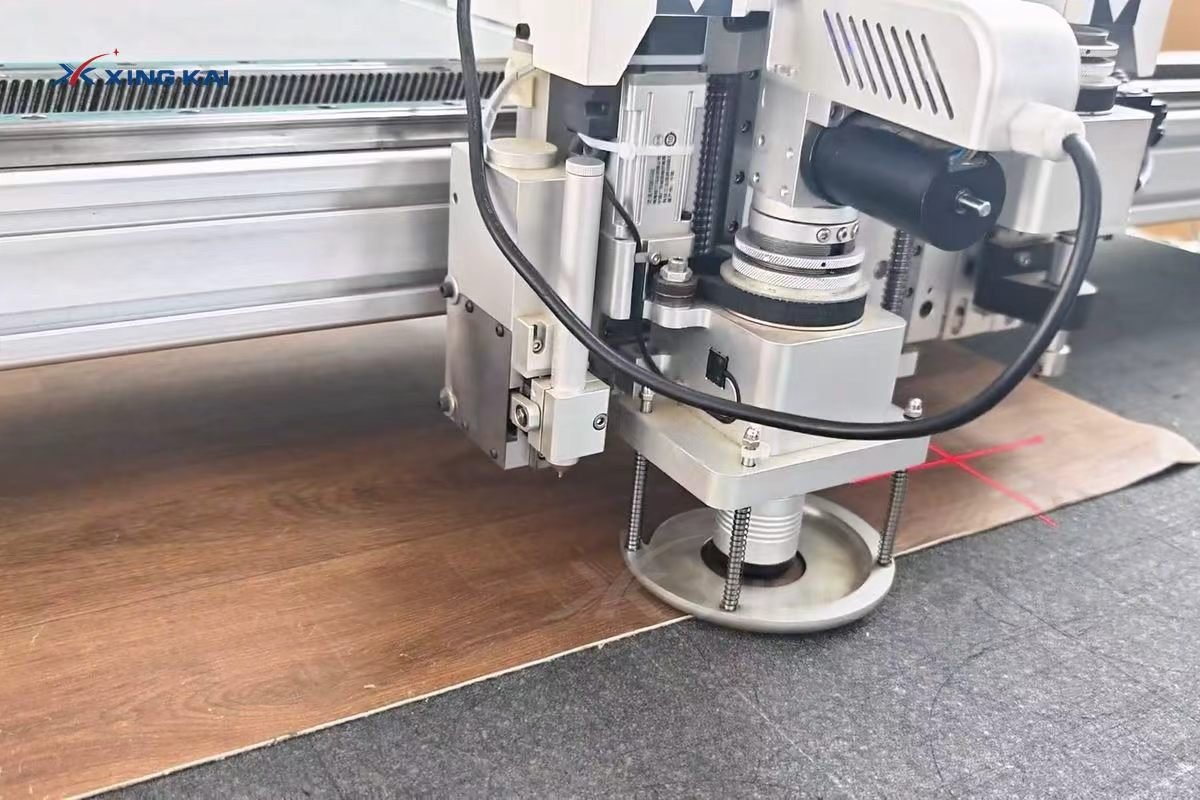
What Drives a Vinyl Flooring Cutting Machine Configuration
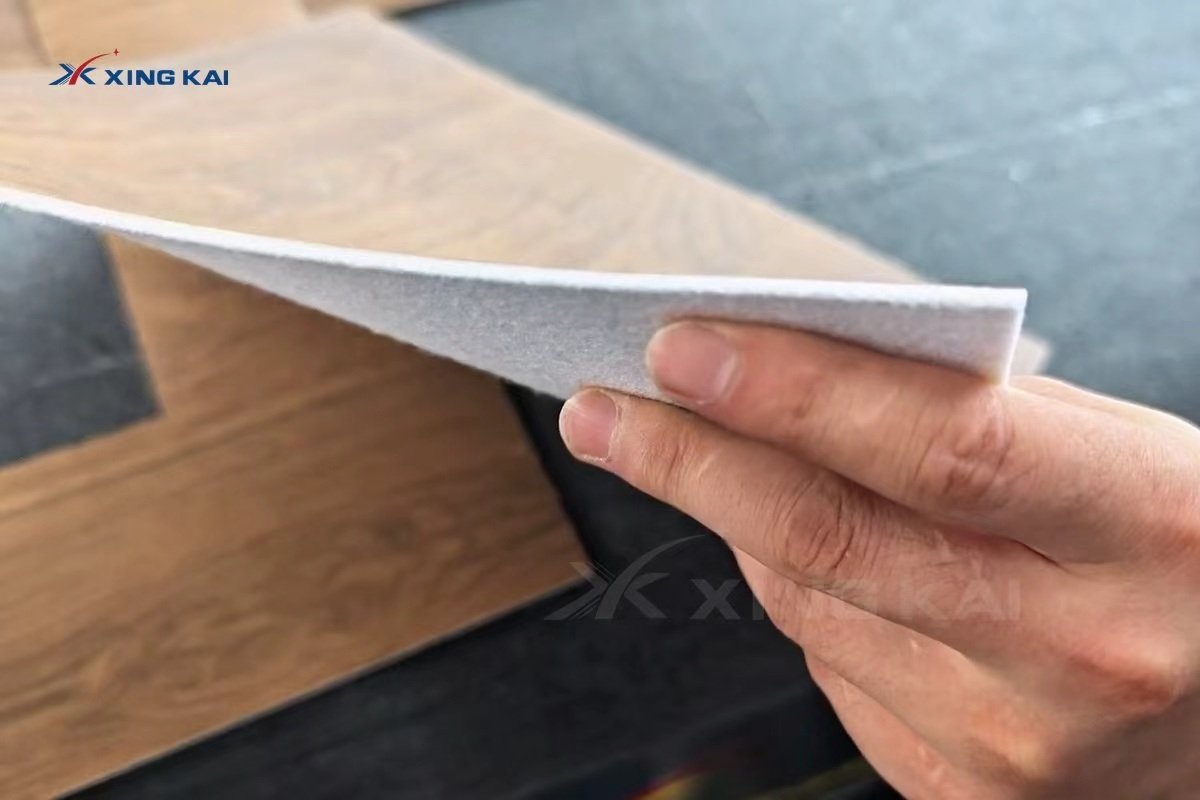
The first factor is the flooring material. A wood grain surface can be combined with different backing layers, wear layers, foam layers, or reinforcement materials. Material behavior affects blade selection, hold-down method, cutting depth, and whether a creasing, marking, or routing process is required. A sample test with the actual flooring material is the best way to confirm a suitable tool path.
The second factor is the part design. Straight plank cuts may require a simple workflow, while irregular rooms, display samples, stair details, and fitted edge pieces can need more complex contours. If the finished part includes inside corners, narrow bridges, slots, or notches, the digital file must be prepared with these details in mind. Accurate artwork and material positioning help the cutting table produce pieces that are easier to install and inspect.
The third factor is material handling. Some flooring materials are supplied as sheets, while others arrive in rolls. A production workflow may need a feeding solution, a flat working area, and adequate vacuum hold-down to keep flexible material stable. The table size should be selected around the maximum material width, the part layout, and how operators will load, collect, and sort the cut pieces.
Digital Cutting for Flooring Samples and Custom Parts
A CNC oscillating knife cutter follows a computer-controlled path. The operator imports a layout, positions the material, and runs the cutting process using the selected tools. For flooring applications, the same digital workflow can support display samples, custom fitted pieces, product sample books, decorative inlays, wall-edge profiles, and smaller production batches.
This is particularly useful when a flooring supplier needs to make a new design without waiting for a physical die. The file can be revised to test a different dimension, a new lock profile, or an adjusted cutout. Once the layout has been confirmed, the same file can be reused for similar orders. Digital control supports consistency, while still leaving room for project-specific shapes.
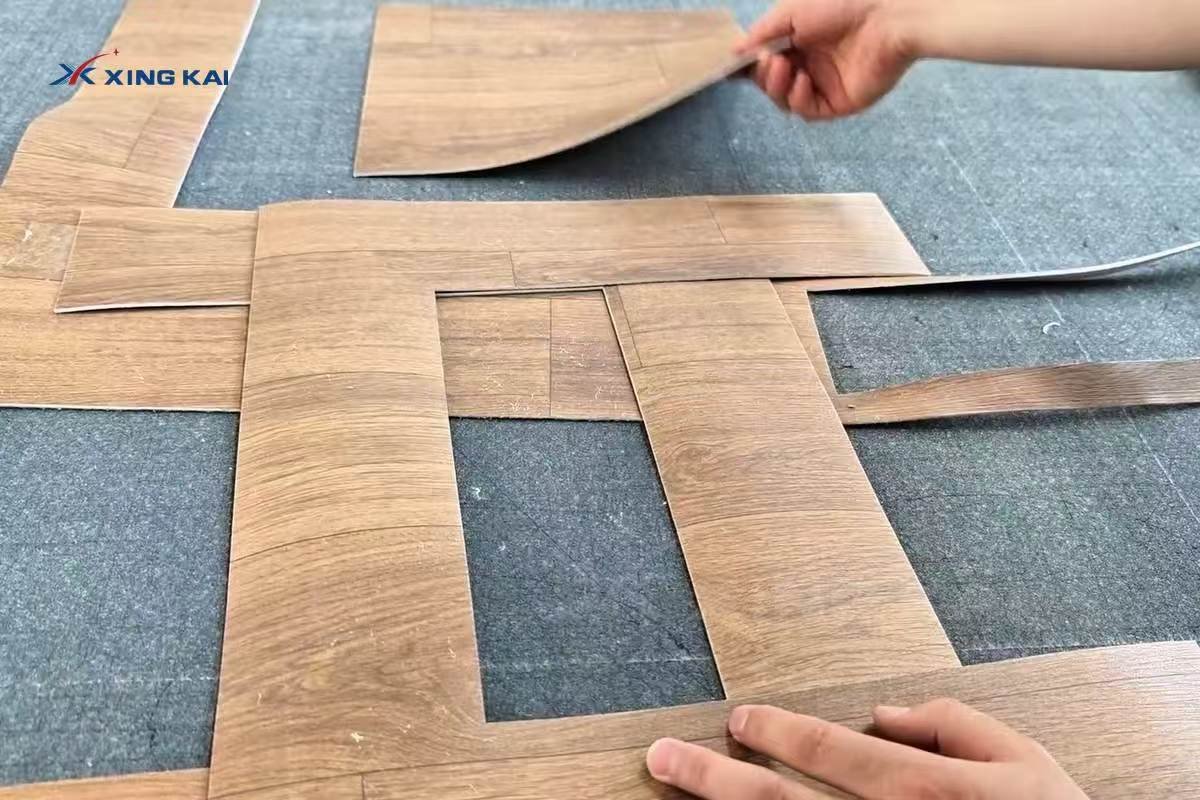
Configuration Levels to Compare Before You Buy
Rather than focusing on a single list price, compare the features that affect the work you need to do. A compact table can suit sample work and smaller components. A larger flatbed provides more room for nested panels and broader sheet materials. A roll-fed configuration can support repeated processing of flexible flooring materials when the supply format and production plan make it appropriate.
Tooling is another important comparison. An oscillating knife is commonly considered for flexible flooring materials, but the right blade, cutting depth, and processing parameters depend on the actual sample. A routing tool may be useful for specific rigid or composite details, while a camera or registration function can help when printed contours need to be followed. These options should be evaluated as part of the production workflow, not as isolated specifications.
Automation also needs to match daily demand. A manually loaded table can be practical for prototypes and custom work. When output becomes more regular, material feeding, collection planning, and nesting software can become more important. The most suitable configuration is the one that fits the material, the part complexity, and the production rhythm, rather than the one with the longest feature list.
Costs to Plan Around the Cutting Table
A cutting machine quotation is only one part of the project. Plan for replacement blades, routine tool maintenance, material testing, and the space needed to load and unload flooring material. Vacuum systems, dust collection where relevant, electrical supply, and operator training should also be discussed before installation. These practical details often determine whether a new workflow is smooth from the first week.
File preparation deserves the same attention. A clean CAD or cutting file should identify cut lines, safe spacing, part labels, and any registration requirements. Good nesting can help organize parts and reduce unused material areas. When projects have many unique pieces, clear labels and a simple sorting process make it easier for the installation or packing team to match each cut part with the correct zone.
New Workflow or Existing Process: What to Test
Before deciding on a CNC vinyl flooring cutting machine, run a sample using your own material and design file. Inspect the cut edge, the surface finish, the accuracy of inside corners, and the fit of the part in the intended application. For multi-layer flooring, inspect the cross section as well as the visible face. A sample test creates useful evidence for choosing tools, setting parameters, and reviewing the final cut quality with the customer.
It is also useful to repeat the same design several times. This helps the team evaluate repeatability and understand the loading, cutting, collection, and sorting sequence. A productive process is not defined only by the cutting speed. It also depends on whether material preparation and part handling remain manageable throughout the workday.
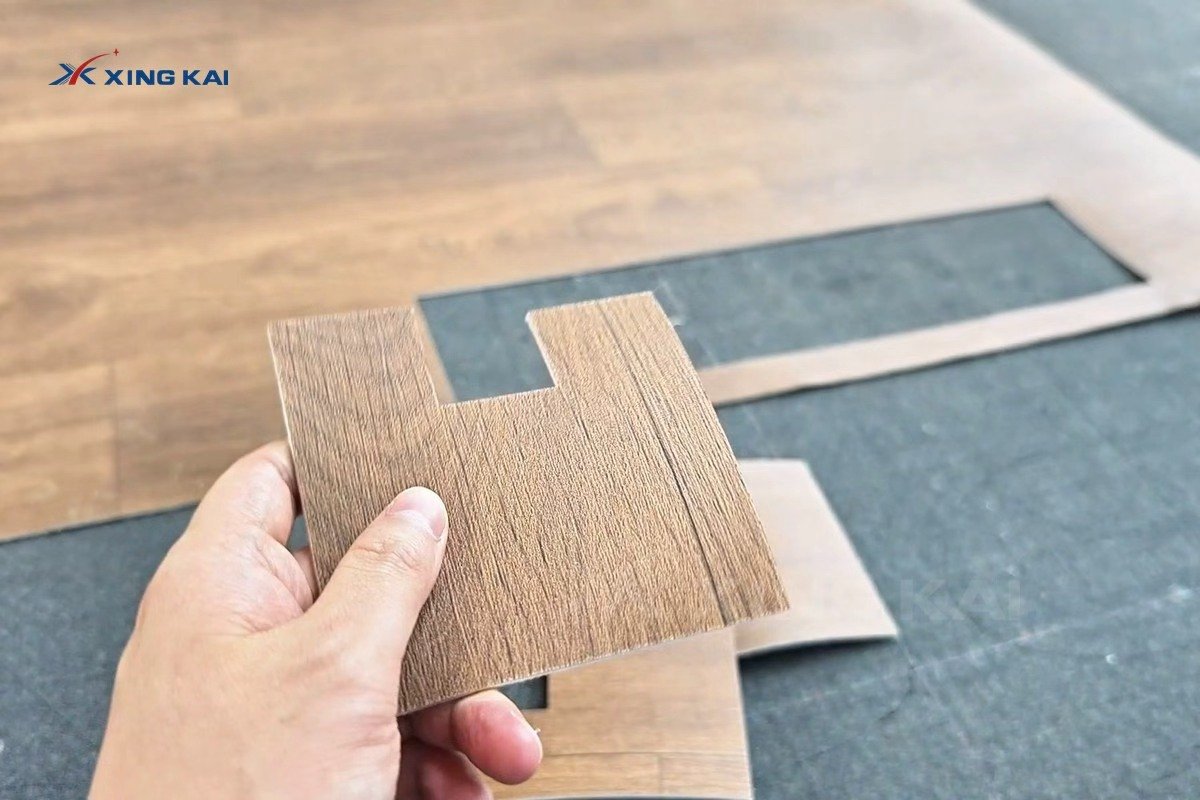
Match the Machine to Your Flooring Work
For small sample collections, custom display pieces, and irregular design work, a digital cutting table can give the flexibility to change files quickly and prepare cut-ready samples without dedicated tooling. For larger recurring jobs, the key questions become material width, nesting strategy, feeding requirements, and how cut parts will move to the next operation. A configuration discussion should start with the real flooring material, maximum part dimensions, and typical daily output.
A CNC oscillating knife cutting machine can support a practical path from flooring design to accurately cut components. Whether the job involves wood grain vinyl flooring samples, PVC flooring pieces, decorative profiles, or custom fitted parts, the right workflow begins with material testing and a clear production goal. Share your material photo, thickness, supply format, maximum cutting size, and target application to evaluate a suitable digital cutting configuration.
Recommended XingKai Equipment for Vinyl Flooring Cutting
For wood grain vinyl flooring, flexible PVC flooring, and similar sheet materials, XingKai recommends the XK1625 CNC Digital Cutter with Vacuum Adsorption as a practical starting configuration. Its 1600 × 2500 mm effective cutting area is suited to common sheet layouts and nested flooring parts. The final tool package should be confirmed with the actual material sample, especially when the flooring construction includes thicker backing layers or a special surface finish.
| Parameter | XK1625 Reference Specification |
|---|---|
| Effective Cutting Area | 1600 × 2500 mm |
| Cutting Speed | Up to 1800 mm/s; actual speed depends on material and cutting pattern |
| Cutting Thickness | Up to 20 mm; depends on material structure, density, and selected blade |
| Cutting Accuracy | ±0.1 mm under suitable material and operating conditions |
| Material Holding | Vacuum adsorption with reverse air blowing |
| Standard Tool | Electric oscillating knife |
| Optional Tools | Pneumatic oscillating knife, drag knife, kiss-cut tool, punching tool, marking pen, and milling tool |
| File Formats | DXF and HPGL |
| Power Supply | AC 220V/380V ±10%, 50Hz |
| Vacuum Pump | 7.5 kW or 9 kW |
Suggested Configuration for This Application
- Electric oscillating knife: suitable as the standard starting tool for common flexible PVC and wood grain vinyl flooring materials.
- Vacuum adsorption table: helps keep flexible flooring material flat and stable during contour cutting.
- Pneumatic oscillating knife: consider this option when a material sample is thicker, denser, or more difficult to cut cleanly.
- Automatic feeding: consider this option for repeat production from compatible roll materials or long patterns.
- CCD camera or projection positioning: consider these options when printed registration, decorative alignment, or special positioning is required.
Configuration should be confirmed after a material test. Please provide the flooring material name, thickness, backing structure, sheet or roll size, largest finished part, CAD file, and expected daily output. This allows XingKai to recommend the working area, blade combination, vacuum system, and feeding option for the actual cutting task.

