Work Hours
Monday to Friday: 7AM - 7PM
Weekend: 10AM - 5PM

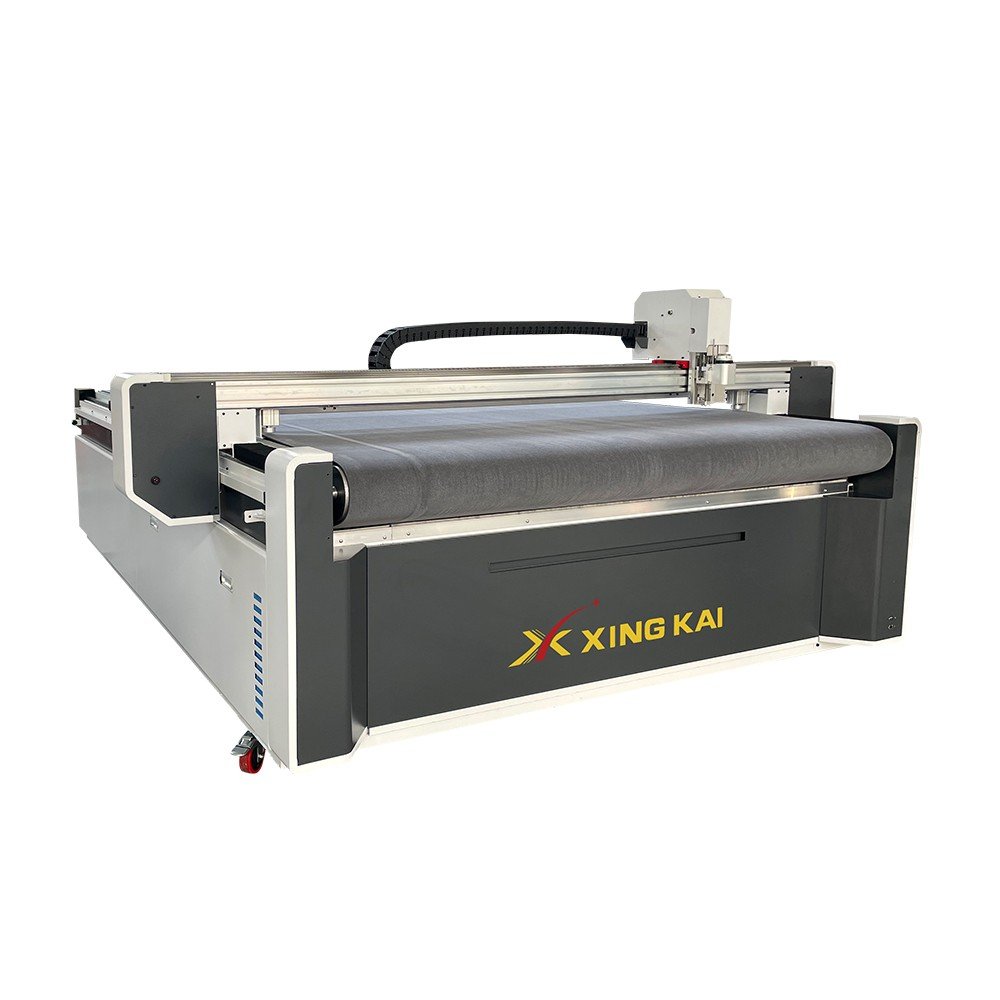
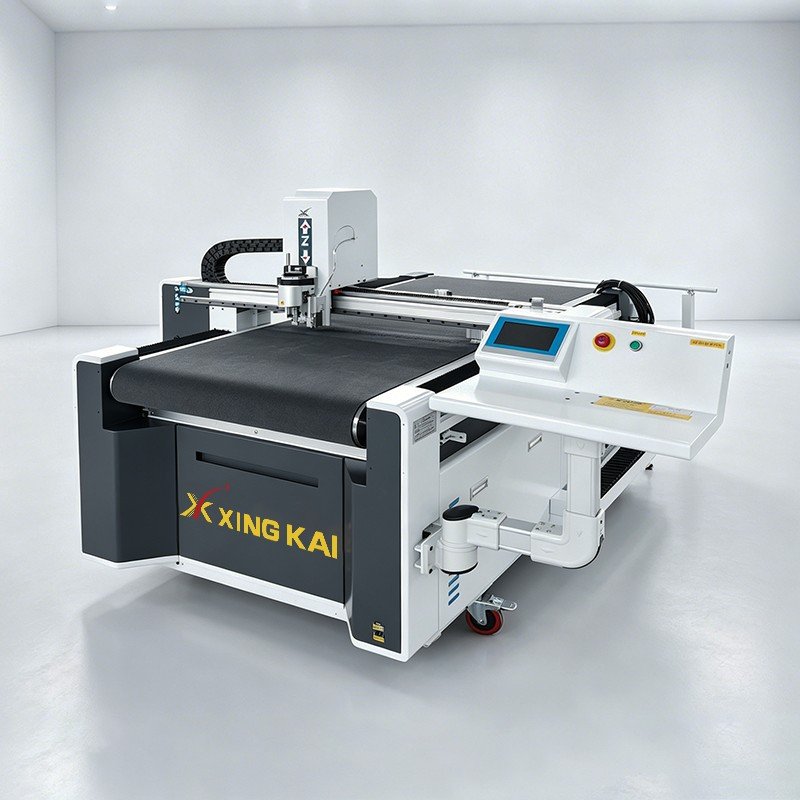
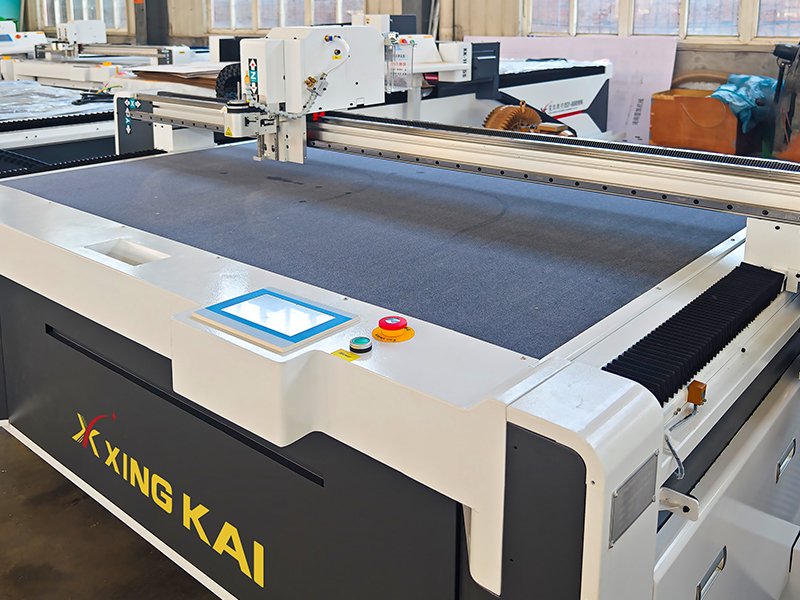
Carbon Fiber Fabric Cutting Machine XK1625 CNC Rotary Knife Cutter with Automatic Feeding
Brand
XINGKAI
Manufacturer
Jinan Xingkai Machinery Equipment Co., Ltd.
Working Area
1600mm × 2500mm
Rating
★★★★★ 4.8 / 5 (211 reviews)
Service
Meets CE quality and safety standards; two-year limited warranty on the entire machine.
Delivery Time
We have stock available; standard delivery time is 3–7 days. Custom orders are made according to actual needs.
Request a Quote
Xingkai carbon fiber fabric cutting machines are industrial CNC cutting systems designed for accurate processing of dry reinforcement fabrics and compatible prepreg materials.
They cut woven carbon cloth, unidirectional carbon fiber, dry carbon fiber fabric, prepreg, carbon-fiber hybrid fabric, and compatible fiberglass or aramid reinforcement materials used in composite production.
The system combines intelligent nesting, CNC control, vacuum adsorption, automatic feeding, and a driven rotary tool. Oscillating knives, marking tools, and material-specific blades can be selected according to fiber architecture and resin condition.
Xingkai carbon fiber cutting machines are used in aerospace components, automotive composites, sporting goods, marine products, wind-energy parts, industrial laminates, and composite research. They may also be called CNC carbon cloth cutters, prepreg cutting machines, or digital composite-fabric cutters.
Carbon Fiber Fabric Cutting Machine Specifications
Customizable working sizes and cutting configurations are available upon request.
| Parameter | Specification |
|---|---|
| Cutting Materials | Dry carbon fiber fabric, woven carbon cloth, unidirectional carbon fiber, prepreg, carbon fiber composite fabric and compatible glass-fiber or aramid reinforcement fabric |
| Cutting Speed | ≤1800 mm/s (actual speed depends on the material and cutting pattern) |
| Cutting Thickness | ≤20 mm, depending on material structure, density and selected blade |
| Material Fixing Method | Vacuum adsorption with reverse air blowing |
| Cutting Accuracy | ±0.1 mm |
| Compatible File Formats | DXF, HPGL |
| Working Voltage | AC 220V/380V ±10%, 50Hz |
| Transmission System | Servo motor drive and precision linear guide rails |
| Working Environment | Temperature: 5°C-35°C; Humidity: 35%-75% |
| Software Resolution | 0.025 mm |
| Operation Interface | Touchscreen |
| Vacuum Pump Power | 7.5 kW or 9 kW |
| Standard Cutting Tool | Driven rotary tool |
| Optional Tools | Electric oscillating knife, pneumatic oscillating knife, drag knife and marking pen |
| Optional Functions | Automatic nesting, projection positioning, CCD camera recognition and automatic feeding |
Available Models and Dimensions
| Model | Effective Cutting Area (L x W) | Machine Dimensions (L x W) | Package Size (L x W) |
|---|---|---|---|
| 7010 | 1000 x 700 mm | 1700 x 1380 mm | 1850 x 1500 mm |
| 1615 | 1500 x 1600 mm | 2320 x 2500 mm | 2470 x 2620 mm |
| 1625 | 2500 x 1600 mm | 3350 x 2500 mm | 3500 x 2560 mm |
| 1825 | 2500 x 1800 mm | 3350 x 2700 mm | 3750 x 2290 mm |
| 1840 | 4000 x 1800 mm | 4800 x 2700 mm | 5200 x 2290 mm |
| 2025 | 2500 x 2000 mm | 3350 x 2900 mm | 1900 x 3100 mm, disassembled |
| 2030 | 3000 x 2000 mm | 3950 x 2900 mm | 2200 x 2900 mm, disassembled |
Recommended Cutting Tools
| Cutting Tool | Suitable Materials | Main Function |
|---|---|---|
| Driven Rotary Tool | Dry woven carbon fiber, fiberglass and flexible reinforcement fabric | Rolls through fibers efficiently while reducing pulling and distortion |
| Electric Oscillating Knife | Prepreg, unidirectional material and compatible composite fabric | Cuts contours, holes and detailed shapes with controlled reciprocating motion |
| Pneumatic Oscillating Knife | Thick stacks, dense reinforcement and difficult composite textiles | Provides greater cutting force for demanding materials |
| Drag Knife | Selected thin prepreg and supported composite sheets | Provides controlled contour cutting after material testing |
| Marking Pen | Composite plies and assembly kits | Marks ply numbers, orientation references, positioning points and kit identification |
Recommended Tool Configurations
| Application | Recommended Configuration |
|---|---|
| Dry woven carbon fiber | Driven Rotary Tool |
| Unidirectional carbon fiber | Driven Rotary Tool or Electric Oscillating Knife after Testing |
| Carbon fiber prepreg | Electric Oscillating Knife or Drag Knife after Testing |
| Thick or dense reinforcement | Pneumatic Oscillating Knife |
| Carbon and fiberglass hybrid fabric | Driven Rotary Tool |
| Roll materials | Driven Rotary Tool + Automatic Feeding System |
| Ply identification | Cutting Tool + Marking Pen |
| Composite kit production | Driven Rotary Tool + Automatic Nesting + Marking Pen |
| Printed or pre-marked material | Cutting Tool + CCD Camera |
| Layup positioning | Cutting Tool + Projection Positioning |
| Customized composite parts | Material-Specific Tool + Automatic Nesting |
Optional blades and accessories
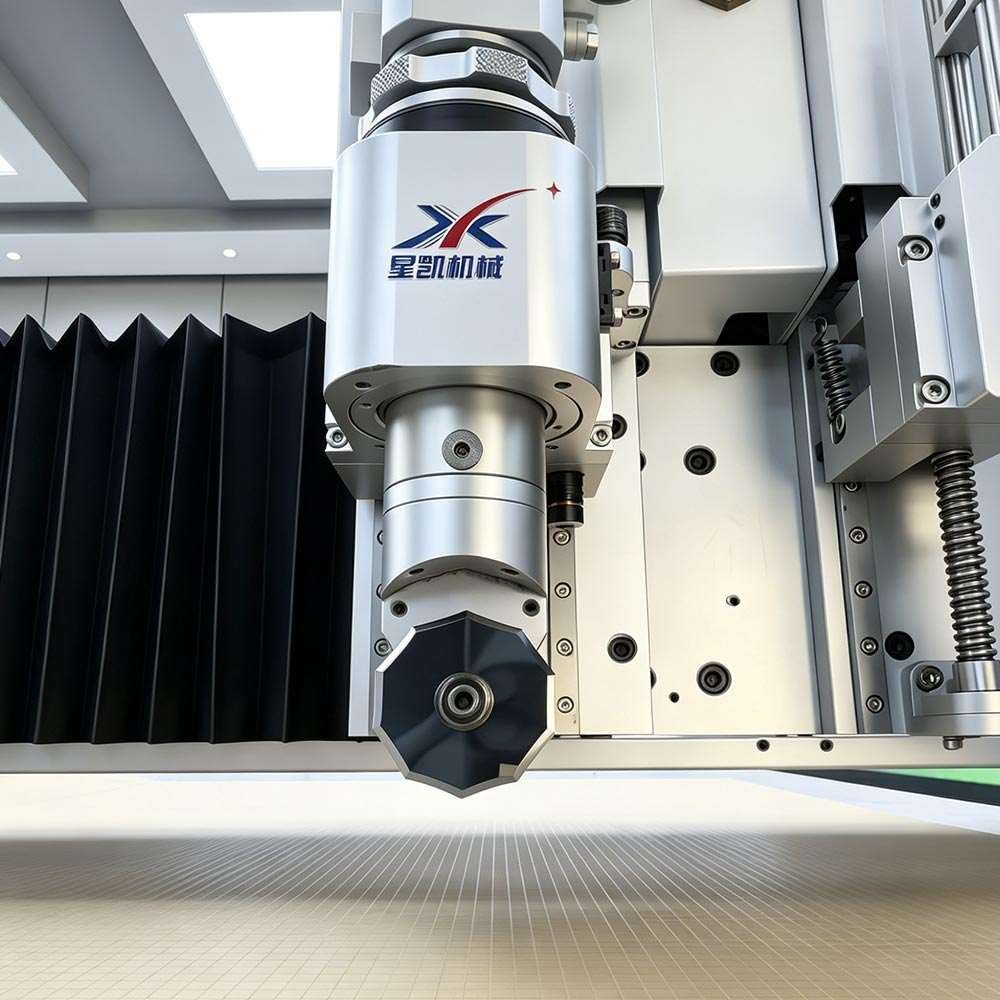
Round knife
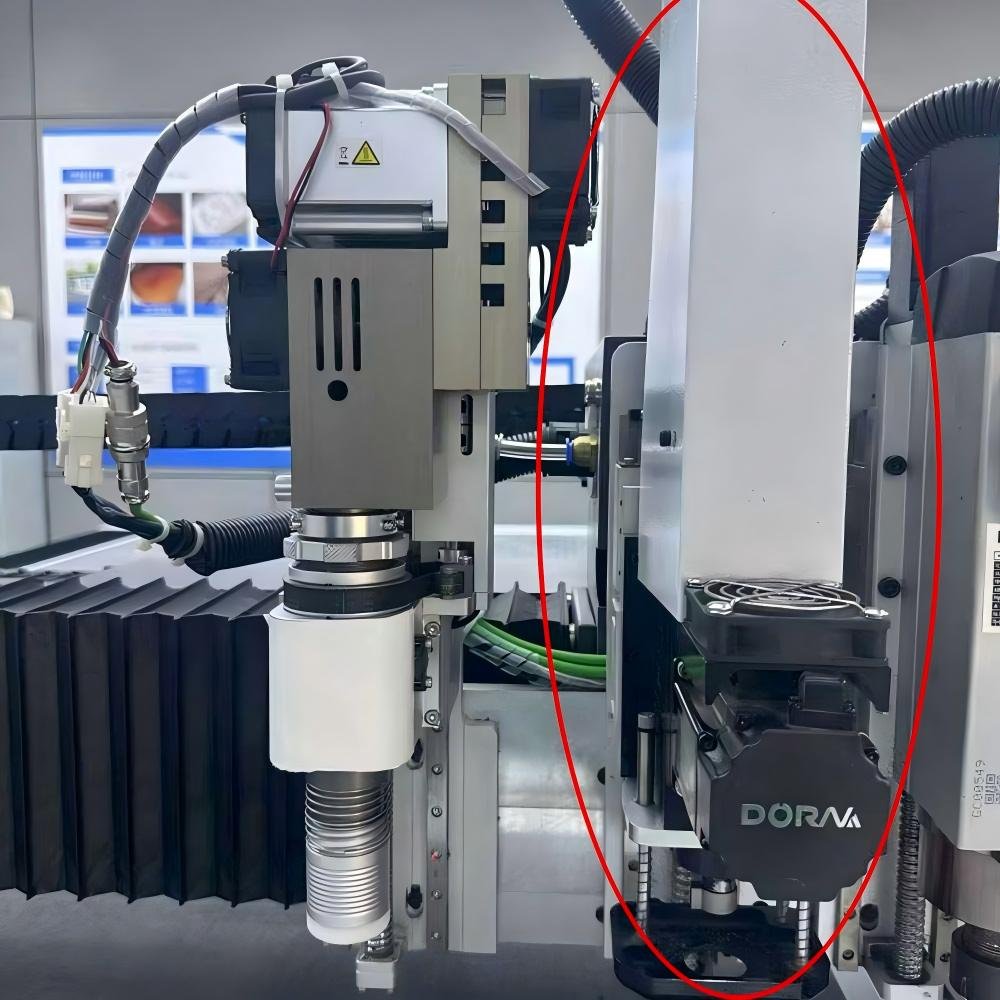
400W high power
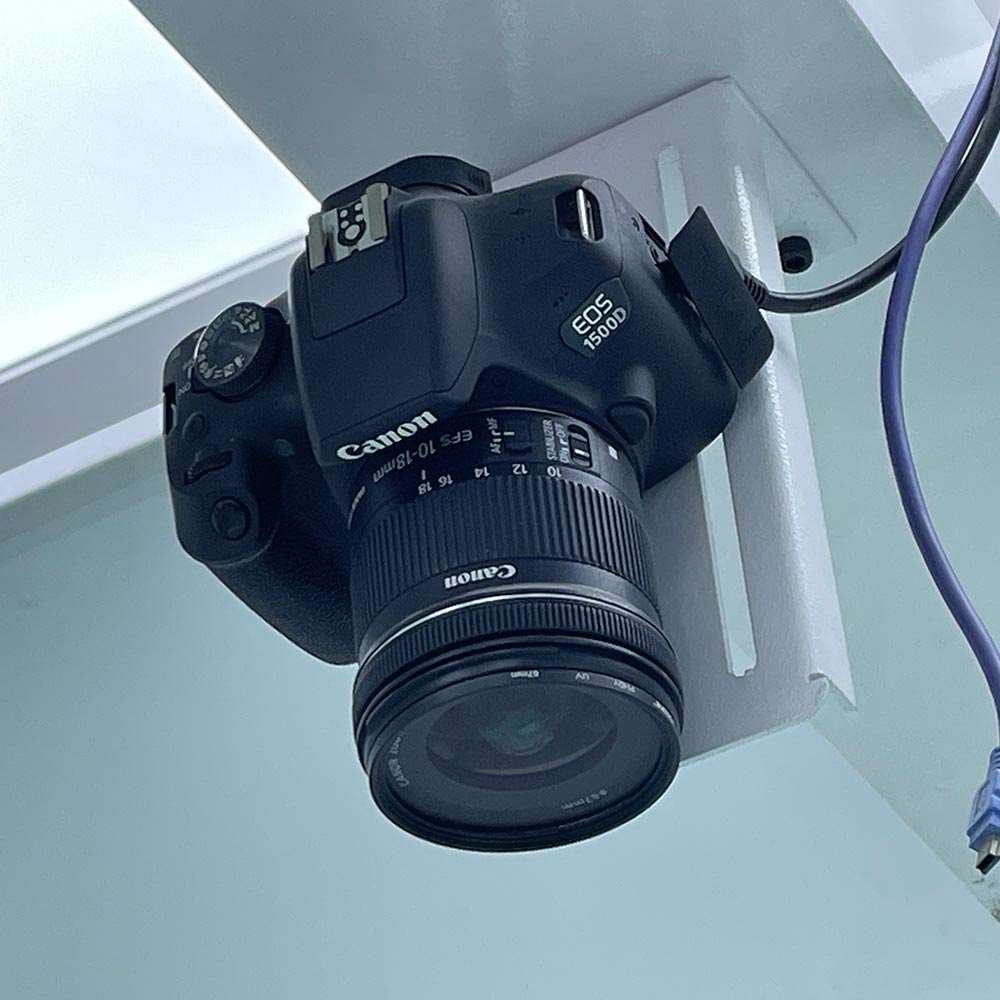
Camera
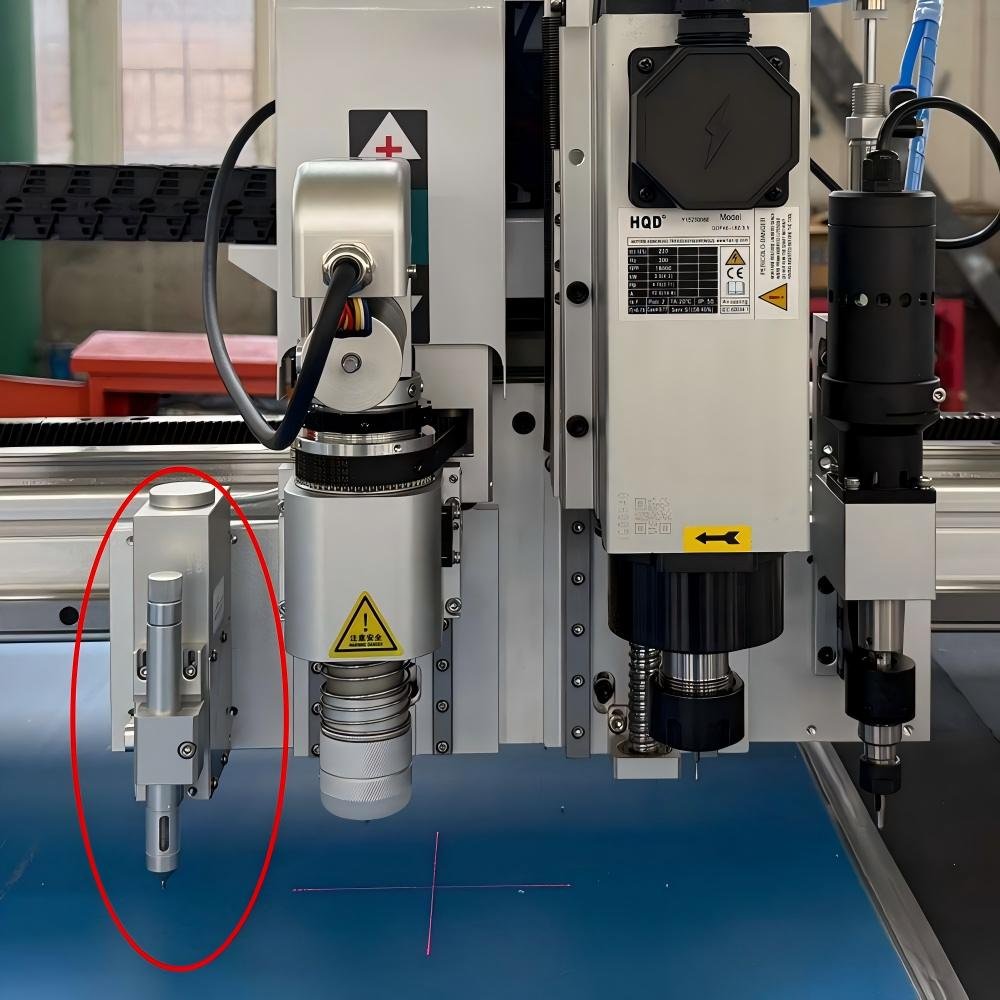
Marco Pen
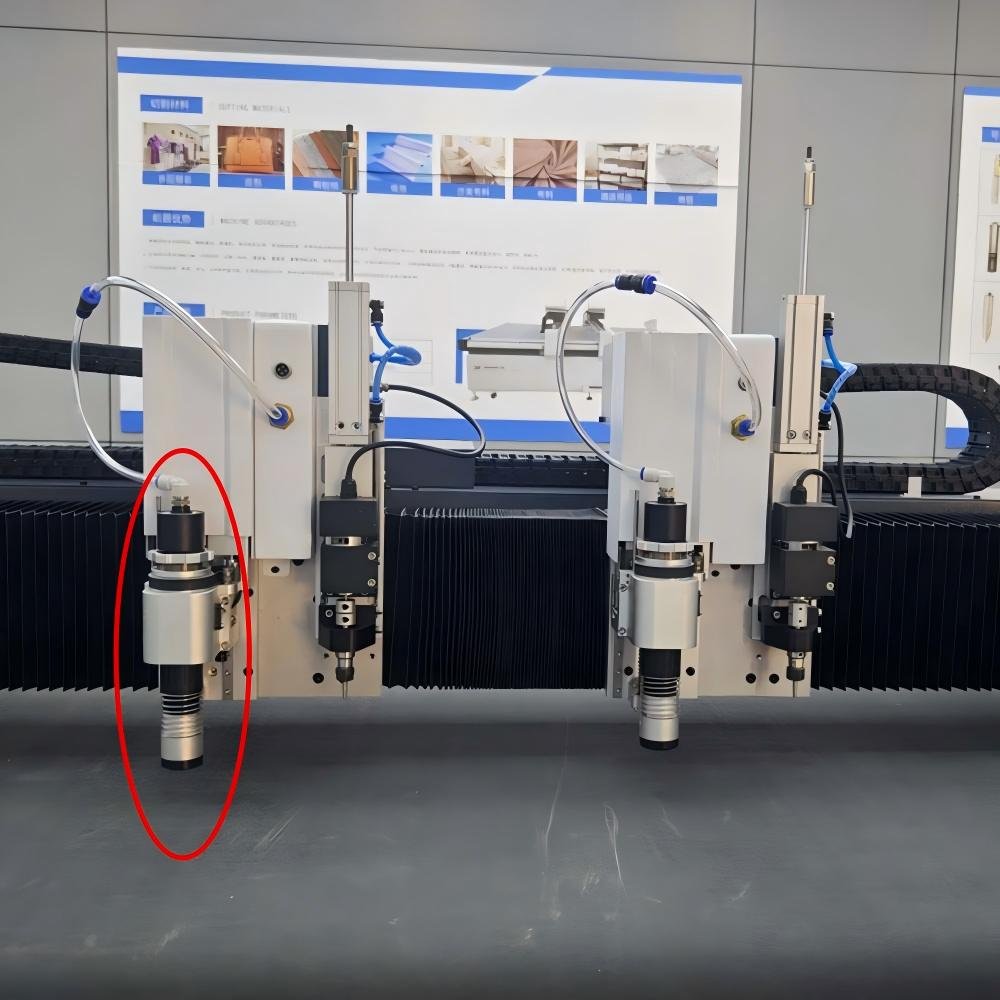
Pneumatic knife
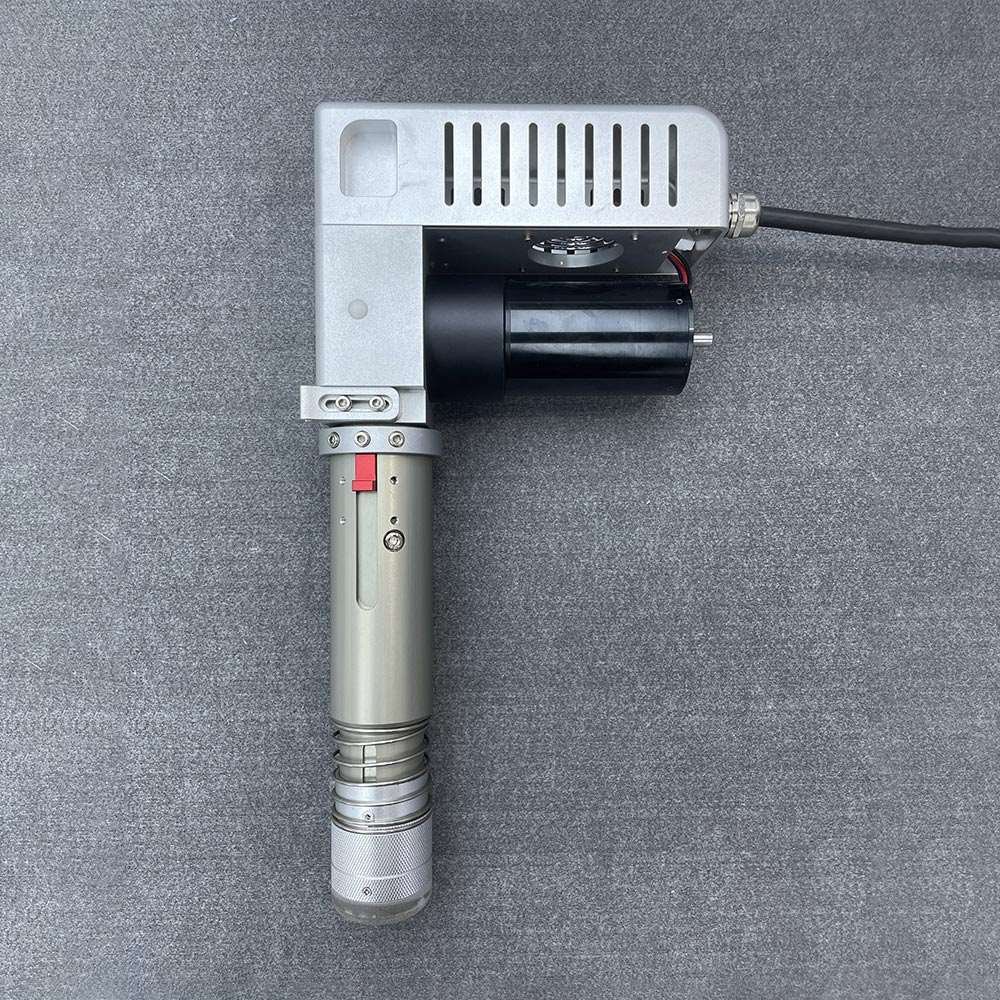
Vibrating knife
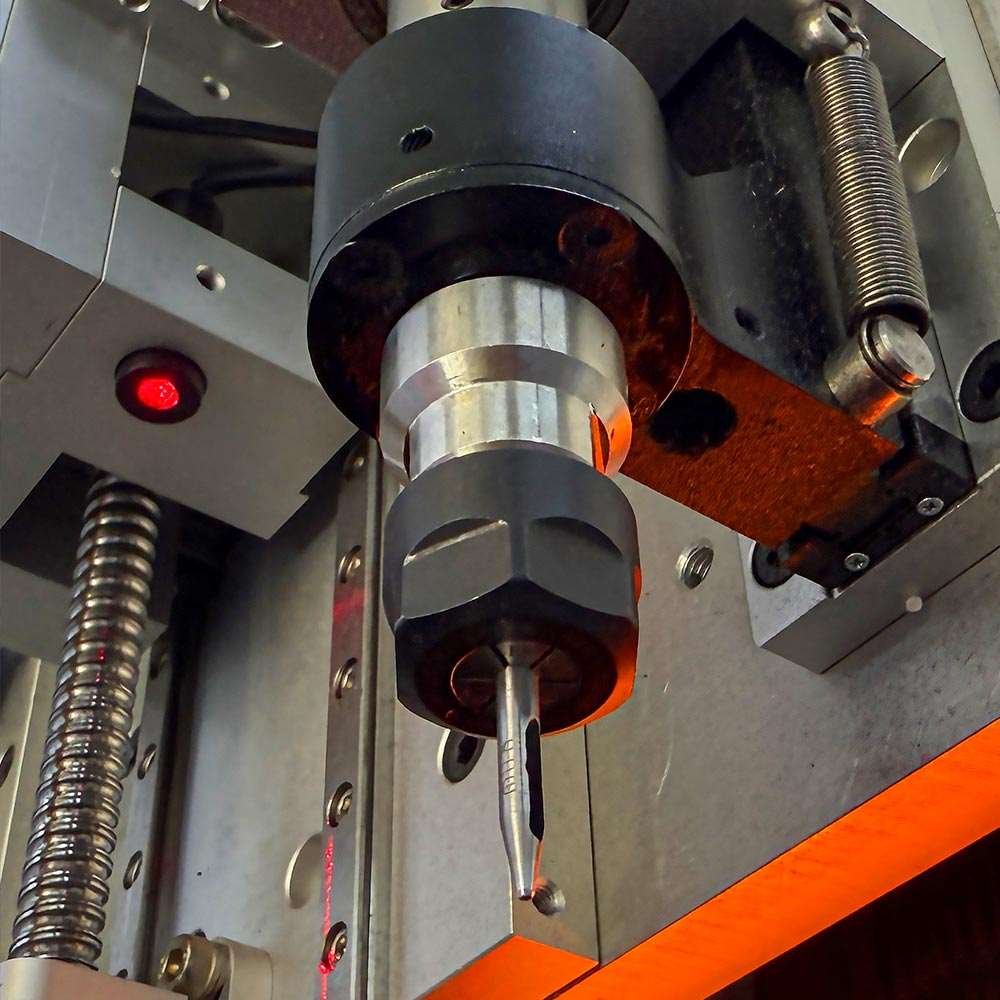
Punching
Why Choose a CNC Carbon Fiber Fabric Oscillating Knife Cutting Machine?
Carbon fiber fabric can fray, distort, shift, or separate at the edge when it is cut with unsuitable tools. Fiber direction and fabric architecture also affect cutting stability and final ply dimensions.
Manual template cutting is slow for complex ply kits and makes it difficult to repeat the same geometry and orientation across batches. Physical dies are costly when components change frequently.
A CNC carbon fiber cutting machine stabilizes the material with controlled vacuum adsorption and follows the imported CAD file. A driven rotary tool rolls through woven fibers, while an oscillating knife can be selected for compatible prepreg or dense materials.
Automatic nesting considers roll width, part geometry, and fiber direction, helping reduce expensive composite-material waste. Marking tools can add ply numbers and orientation references for layup and kit assembly.
Mechanical blade cutting avoids laser heat and limits the thermal damage, resin burning, fumes, and edge changes that can occur when carbon-fiber materials are processed thermally.
Advantages of the High-End Industrial Carbon Fiber Fabric Cutting Machine
High-Speed Cutting
The high-speed motion control system and driven rotary cutting technology shorten sampling and production cycles while processing different patterns continuously.
High-Precision Cutting
The machine follows imported design files to cut straight lines, curves, holes, slots, and complex contours with consistent dimensions.
Intelligent Automatic Nesting
Nesting software arranges parts according to material width, usable area, grain or fiber direction, and component shape to reduce offcuts.
No Cutting Dies Required
Cutting begins after the design file is imported. Styles, dimensions, and quantities can be changed without manufacturing new cutting dies.
Automatic Feeding
The conveyor system supports continuous processing of carbon-fiber fabric and prepreg rolls while maintaining controlled, low-tension feeding.
Reduced Labor Costs
Automatic nesting, material positioning, feeding, marking, and cutting reduce repetitive manual work and dependence on skilled hand cutting.
Clean Cutting Edges
Blade cutting creates no laser heat or burnt resin edge and can reduce dust compared with routing fully cured composite sheets.
Suitable for Relevant Material Variants
The machine can process dry woven carbon cloth, unidirectional reinforcement, compatible prepreg, hybrid fabric, fiberglass, and selected aramid textiles.
Supports Multiple Production Methods
The machine supports prototypes, customized orders, multiple sizes, small batches, and continuous production from saved digital files.
Fast Product Changeover
Operators can switch products by loading another design file and selecting the stored tool parameters, reducing setup time between orders.
Stable and Reliable Operation
Precision racks, industrial linear guide rails, servo drives, and a reliable CNC system provide smooth movement and long-term production stability.
Applicable materials
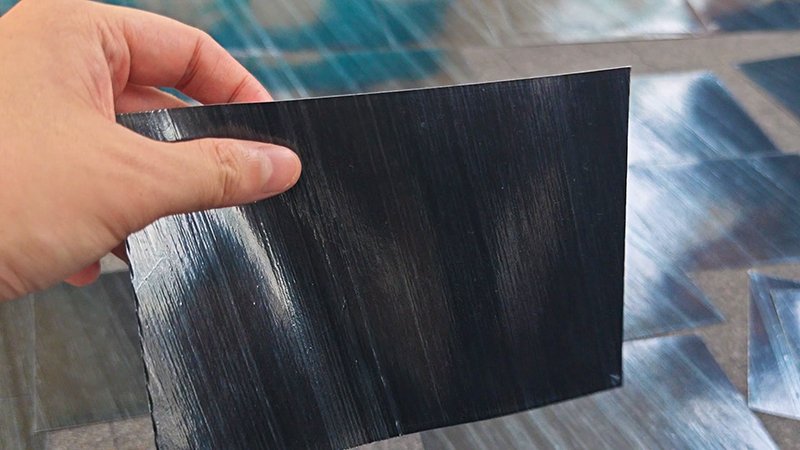
Carbon Fiber
Key Features of the Xingkai Carbon Fiber Fabric Oscillating Knife Cutting Machine
Heavy-Duty Machine Frame
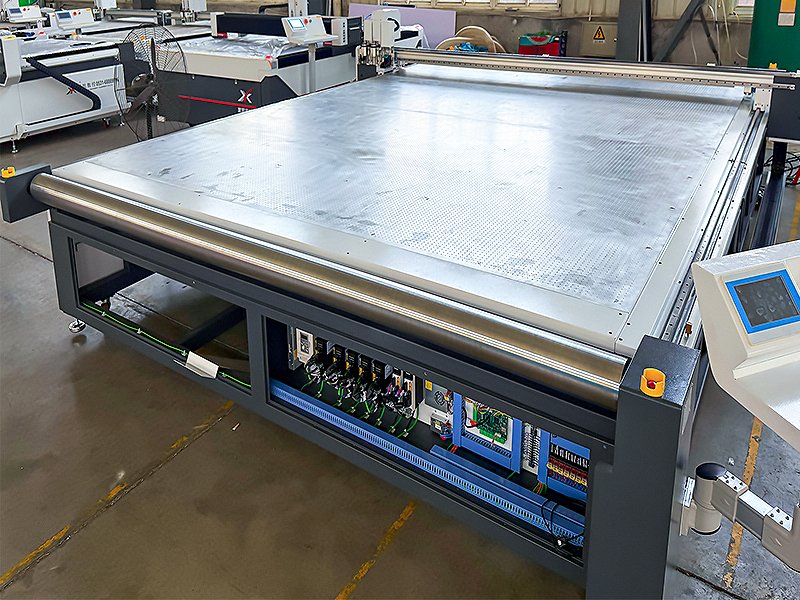
The high-strength welded frame is precision-machined and stress-relieved for rigidity, stability, and long-term cutting accuracy.
Intelligent CNC Control System
The industrial touchscreen provides reliable control of files, tools, cutting paths, feeding, and processing parameters.
Powerful Vacuum Adsorption
Zoned vacuum adsorption holds lightweight reinforcement fabrics flat while reducing movement, wrinkles, and ply distortion.
High-Precision Drive System
Precision gear racks and industrial linear guide rails ensure fast, smooth movement and accurate cutting of straight lines, curves, holes, and irregular contours.
Driven Rotary Cutting
The motor-driven circular blade rolls through dry reinforcement fabrics and helps reduce fiber dragging and edge distortion.
Automatic Feeding System
Low-tension conveyor feeding supports continuous roll processing and repeat ply-kit production.
Ply Marking and Projection Options
Marking and projection systems support ply numbering, fiber-orientation references, material placement, and kit organization.
Multiple Tool Configuration
Driven rotary, electric oscillating, pneumatic oscillating, drag, and marking tools can be selected according to weave, resin condition, thickness, and process.
Stable and Reliable Operation
The modular structure and automatic lubrication system reduce maintenance requirements and support long-term continuous production.
A driven rotary tool is generally recommended for dry woven carbon fiber because the rolling blade reduces dragging across the fiber structure. Electric oscillating knives may suit prepreg, unidirectional reinforcement, and other supported materials after testing. Dense stacks may require a pneumatic oscillating knife.
Tool selection depends on whether the material is dry fabric or prepreg, the weave and areal weight, resin tack, backing film, ply count, and required edge quality. Prepreg handling may also require controlled storage and a clean production environment.
Provide the material type, weave, areal weight, resin condition, thickness, roll width, fiber-direction requirements, cutting drawing, and daily output. Sample testing is required before the final configuration is confirmed.
Machine details and key components
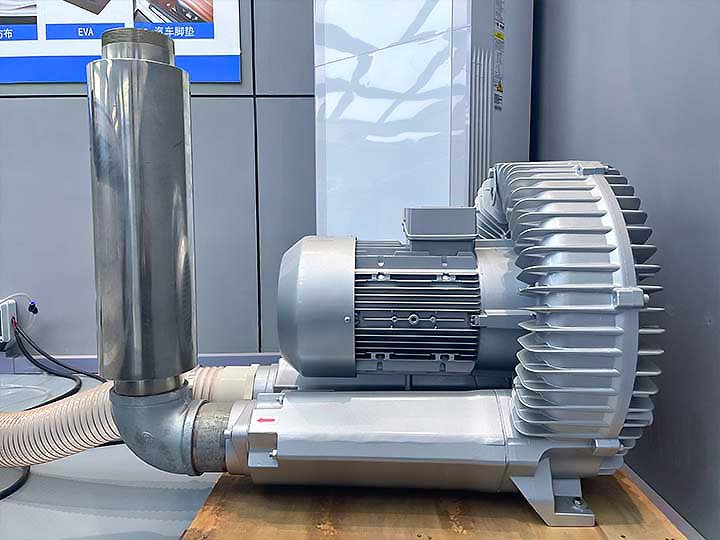
Fan equipment
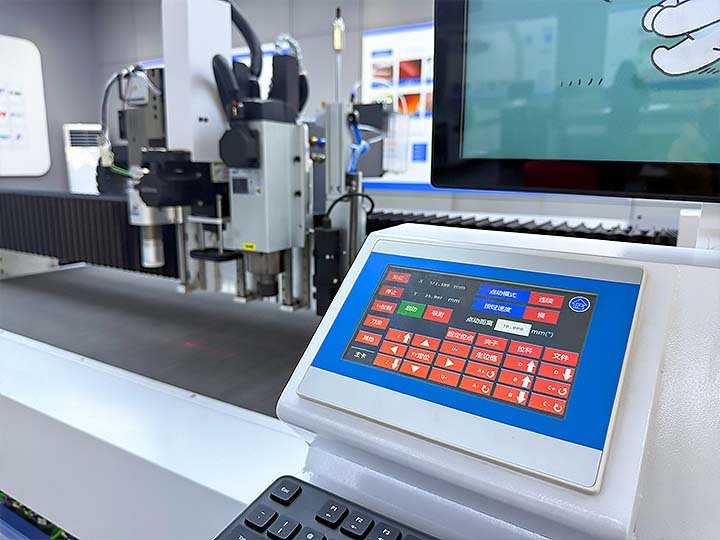
Multilingual operating system
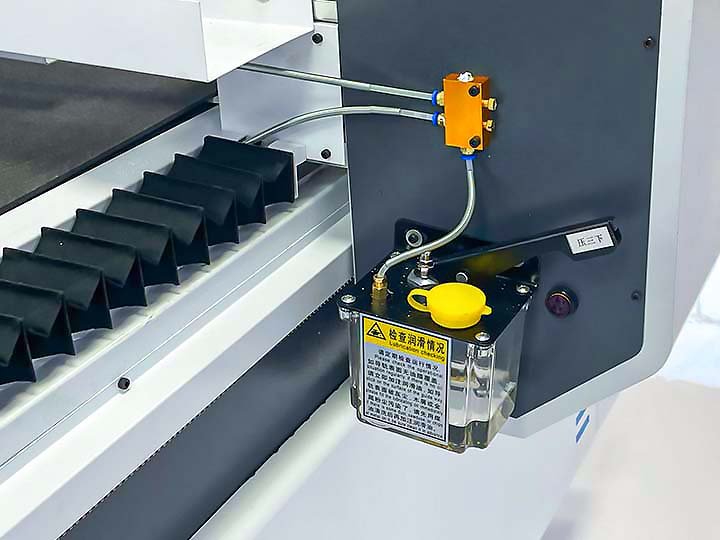
Oil pump
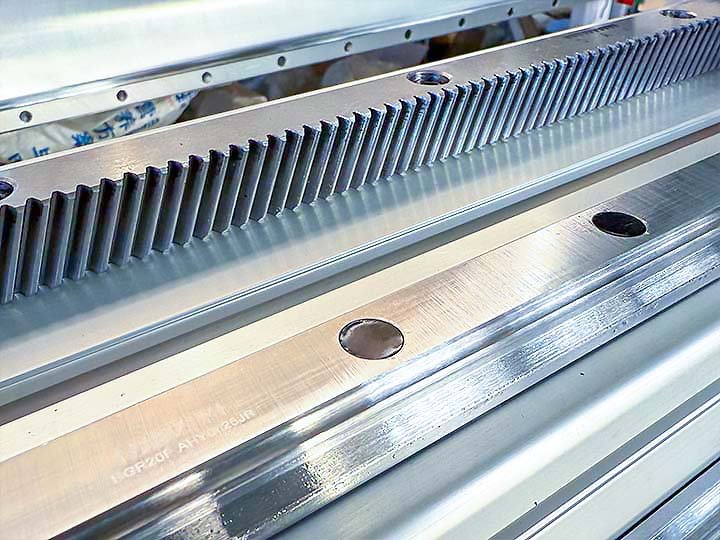
Rack
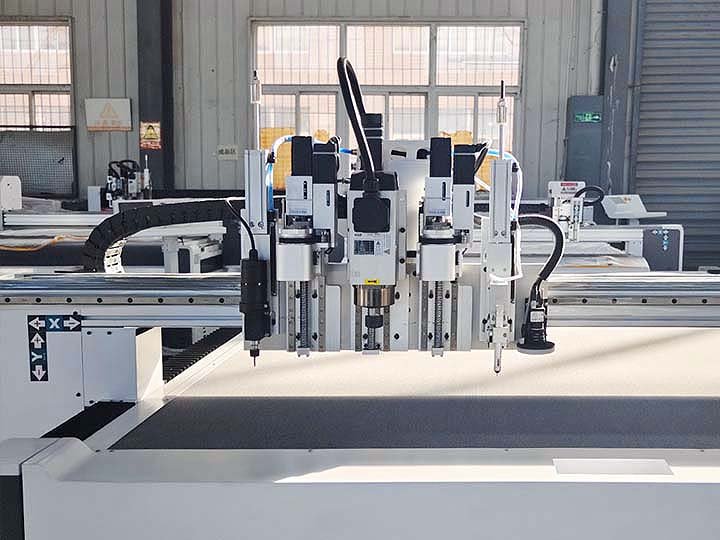
Multiple blade combinations
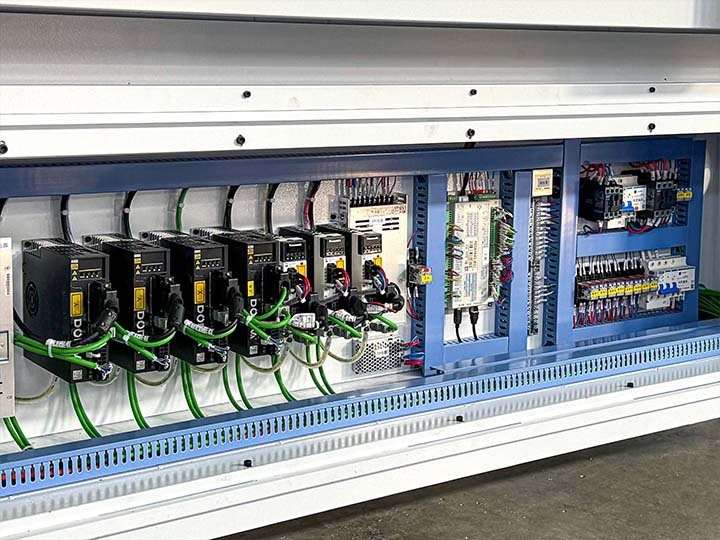
Servo driver
Felt
Aviation aluminum honeycomb panel
Why Choose an Oscillating Knife Cutter Instead of a Laser Cutting Machine for Carbon Fiber Fabric?
Laser cutting applies heat to carbon fibers and any resin system. Depending on the material, this can burn resin, discolor edges, generate fumes, or create a heat-affected area.
A driven rotary or oscillating blade cuts mechanically without thermal input. It helps preserve the material structure and produces plies suitable for layup, molding, and composite-kit assembly.
Compared with manual cutting, the Xingkai digital system combines nesting, vacuum adsorption, controlled feeding, marking, and precision cutting to improve repeatability and reduce high-value material waste.
For dry carbon cloth, prepreg, unidirectional reinforcement, and hybrid composite fabrics, mechanical digital cutting is generally the cleaner and more flexible production method.
Who Should Buy a Xingkai Digital Carbon Fiber Fabric Cutting Machine?
Aerospace Composite Manufacturers
Produces accurately shaped plies and organized kits for compatible aerospace composite components.
Automotive Composite Manufacturers
Cuts reinforcement layers for body parts, interior structures, panels, and performance components.
Sporting Goods Manufacturers
Processes carbon-fiber plies for bicycles, rackets, helmets, boards, and related equipment.
Marine Composite Manufacturers
Cuts reinforcement fabric for boat components, panels, covers, and structural laminates.
Wind-Energy Component Manufacturers
Processes compatible reinforcement fabrics used in blade and structural composite production.
Composite Material Converters
Provides ply cutting, kitting, labeling, and material preparation services.
Research and Prototype Centers
Supports material trials, new-product development, custom laminates, and small-batch composite parts.
How to Choose a Xingkai Carbon Fiber Fabric Cutting Machine
For dry woven carbon fiber fabric, select a driven rotary tool and zoned vacuum adsorption.
For prepreg or unidirectional reinforcement, test electric oscillating and drag-knife options to determine which produces the required edge without material lifting.
For thick, dense, or stacked reinforcement, evaluate a pneumatic oscillating knife and confirm the compressed total thickness.
For roll processing and ply-kit production, select a conveyor table with low-tension automatic feeding.
Add a marking pen for ply numbers and orientation references, and projection positioning when operators need assistance during layup or material placement.
Machine configuration should be based on fabric type, weave, areal weight, resin condition, thickness, backing film, roll width, fiber orientation, and daily output.
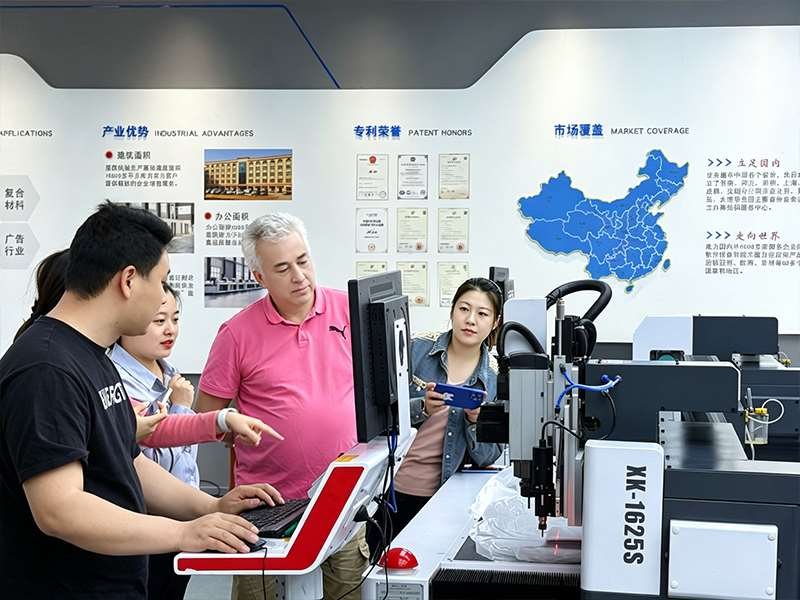
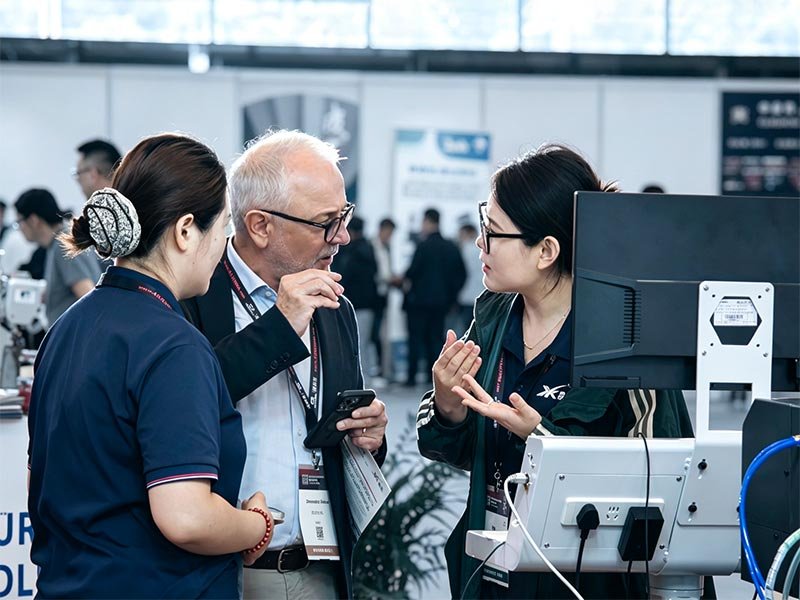
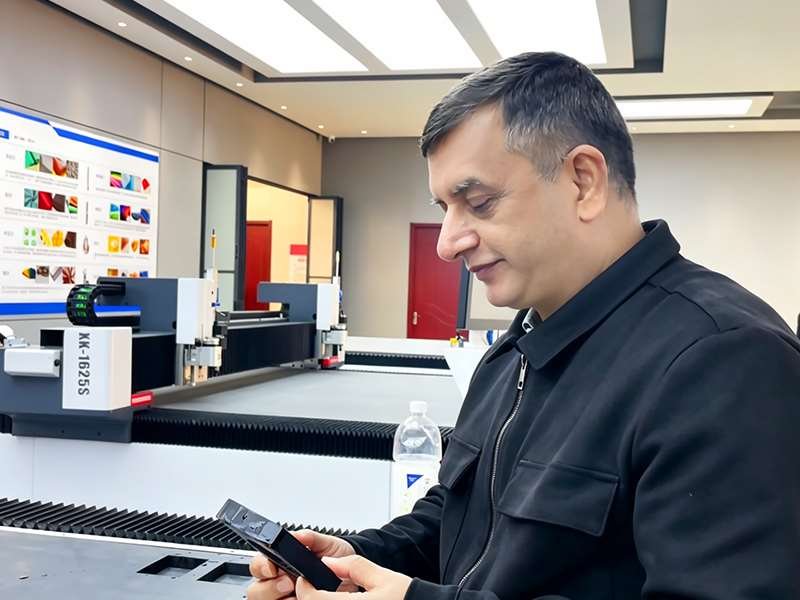
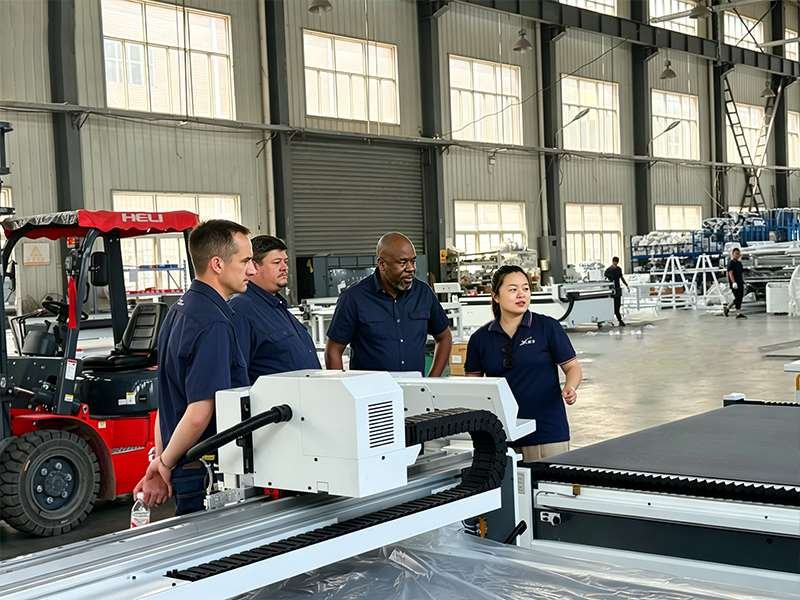
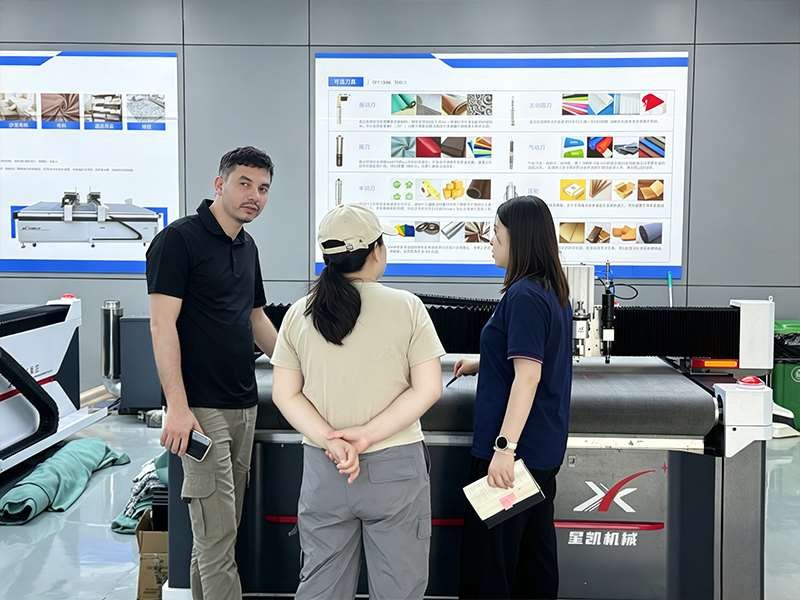
Recognition from customers

Frequently Asked Questions
What carbon-fiber materials can the machine cut?
It can cut dry woven carbon fiber, unidirectional reinforcement, compatible prepreg, carbon-fiber hybrid cloth, and selected fiberglass or aramid reinforcement fabrics.
Material samples are required because weave, resin tack, backing film, and fiber architecture affect tool selection.
What is the maximum cutting thickness?
The machine can process suitable carbon-fiber fabric and stacked reinforcement up to 20 mm thick.
Actual capacity depends on material density, ply count, resin condition, compression, blade length, and accuracy requirements.
Which tool is best for dry carbon fiber fabric?
A driven rotary tool is generally recommended for dry woven carbon cloth because it rolls through the fibers and reduces pulling.
The correct blade should be confirmed using the actual weave and areal weight.
Can the machine cut carbon fiber prepreg?
Yes, compatible prepreg can be cut using an electric oscillating knife or another tested tool.
Resin tack, backing film, storage condition, temperature, and required edge quality must be evaluated.
Does cutting create heat or burnt edges?
No. Mechanical knife cutting does not use laser heat and avoids thermal damage to fibers or resin.
Small fibers or debris may occur, so suitable cleaning and operator protection procedures are recommended.
How is lightweight carbon cloth held flat?
Zoned vacuum adsorption stabilizes the fabric and reduces shifting and wrinkles during cutting.
Vacuum strength should be adjusted to avoid distorting lightweight or highly permeable fabrics.
Can the machine cut multiple layers?
Yes, small-batch multilayer cutting may be possible for suitable materials.
The result depends on compressed thickness, interlayer movement, resin tack, surface friction, and required ply accuracy.
Which design files are supported?
The machine supports DXF and PLT and works with compatible CAD, nesting, and composite-ply software.
Imported plies can be nested and converted into cutting paths.
Does the machine require cutting dies?
No. Ply shapes and sizes can be changed directly in the digital files.
This supports prototypes, engineering changes, custom parts, and high-mix production.
Can the machine mark ply numbers and fiber direction?
Yes. A marking pen can add ply numbers, orientation references, positioning points, and kit identification.
Marking visibility and compatibility should be tested to avoid affecting the composite process.
How often should the blade be replaced?
Blade life depends on fiber type, weave, areal weight, resin, thickness, cutting speed, and daily operating time.
Replace the blade when fibers pull, edges fray excessively, corners lose accuracy, or cutting is incomplete.
Can I test my carbon fiber material before purchasing?
Yes. Customers can send material samples and cutting files to Xingkai for testing.
We can provide cutting videos, finished plies, and recommended tool parameters.
To recommend the correct configuration, please provide:
Material | Dry Fabric or Prepreg | Weave and Areal Weight | Thickness | Roll Width | Cutting Size | Daily Production
Jinan Xingkai Machinery Equipment Co., Ltd. provides digital cutting solutions for dry carbon fiber, prepreg, unidirectional reinforcement, fiberglass, aramid fabric, hybrid textiles, and composite ply-kit production.