Work Hours
Monday to Friday: 7AM - 7PM
Weekend: 10AM - 5PM

An EVA foam cutting machine uses a CNC-controlled oscillating knife to cut EVA foam sheets into accurate inserts, pads, seals, protective parts and custom profiles. It is a practical solution for businesses that need clean edges, repeatable dimensions and fast design changes without making a physical die.
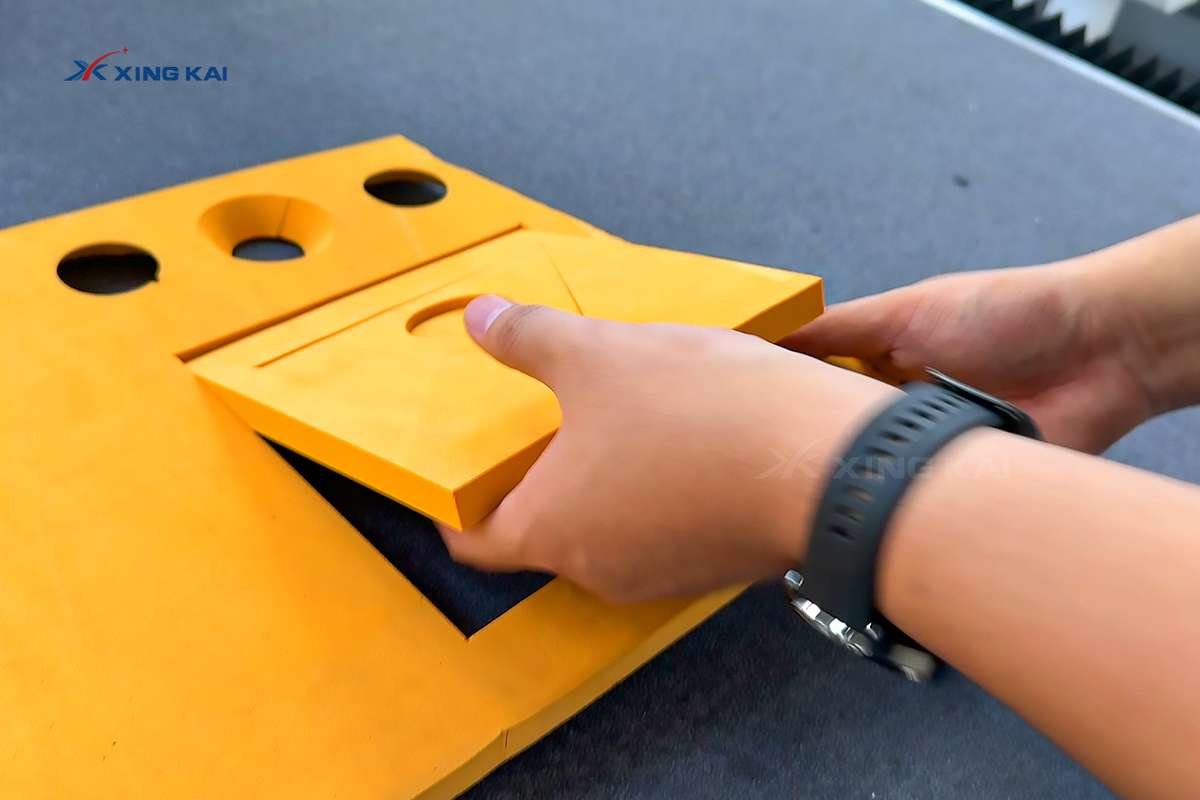
Quick answer: EVA foam cutting is best handled by a digital knife cutter when parts have changing shapes, internal openings, small batches or frequent design revisions. The right configuration depends on foam thickness, density, sheet size and whether the job needs through-cutting, creasing, marking or V-cutting.
Table of Contents
- What Is EVA Foam?
- Why EVA Foam Cutting Needs Control
- EVA Foam Cutting Methods Compared
- How a CNC EVA Foam Cutting Machine Works
- Tool Selection for EVA Foam Cutting
- Practical EVA Foam Cutting Workflow
- Common EVA Foam Cutting Problems
- EVA Foam Applications
- Choosing an EVA Foam Cutting Machine
- Frequently Asked Questions
What Is EVA Foam?
EVA foam is made from ethylene-vinyl acetate, a flexible copolymer material commonly used where cushioning, shock absorption, protection or a soft durable surface is required. Its properties vary with density, thickness, formulation and surface treatment. Learn more about the EVA polymer.
Key Characteristics
- Flexible and resilient under compression.
- Available in a broad range of thicknesses and densities.
- Suitable for shaped parts, inserts and laminated products.
- Can be cut, marked, creased or combined with other materials.
Common Uses
- Protective packaging inserts.
- Sports, footwear and orthotic components.
- Tool-control trays and equipment cases.
- Automotive, electronics and industrial protection parts.
Why EVA Foam Cutting Needs Control
Compression Can Change the Edge
When an unsuitable blade or excessive pressure compresses EVA foam before it separates, the cut edge can look uneven. Cutting parameters must match the material rather than relying on a single setting for every sheet.
Small Features Need a Stable Sheet
Narrow gaps, slots and interior contours can shift if the sheet is not held securely. Vacuum adsorption and a sensible cutting order keep the material stable until the outside contour is released.
Different Foam Grades Cut Differently
Soft, dense, laminated and adhesive-backed EVA foam can require different blade types and settings. A sample cut is the fastest way to confirm the edge quality and complete cut-through.
EVA Foam Cutting Methods Compared
| Method | Best For | Strength | Limitation |
|---|---|---|---|
| Hand cutting | Simple samples | Low starting cost | Slow and difficult to repeat accurately |
| Die cutting | High-volume fixed designs | Efficient once the die is ready | New designs require new dies |
| Laser cutting | Selected foam materials | Non-contact processing | Heat can affect the edge or material finish |
| CNC oscillating knife | Custom shapes and variable batches | Cold cutting, flexible files and no die | Requires tested tooling and holding |
How a CNC EVA Foam Cutting Machine Works
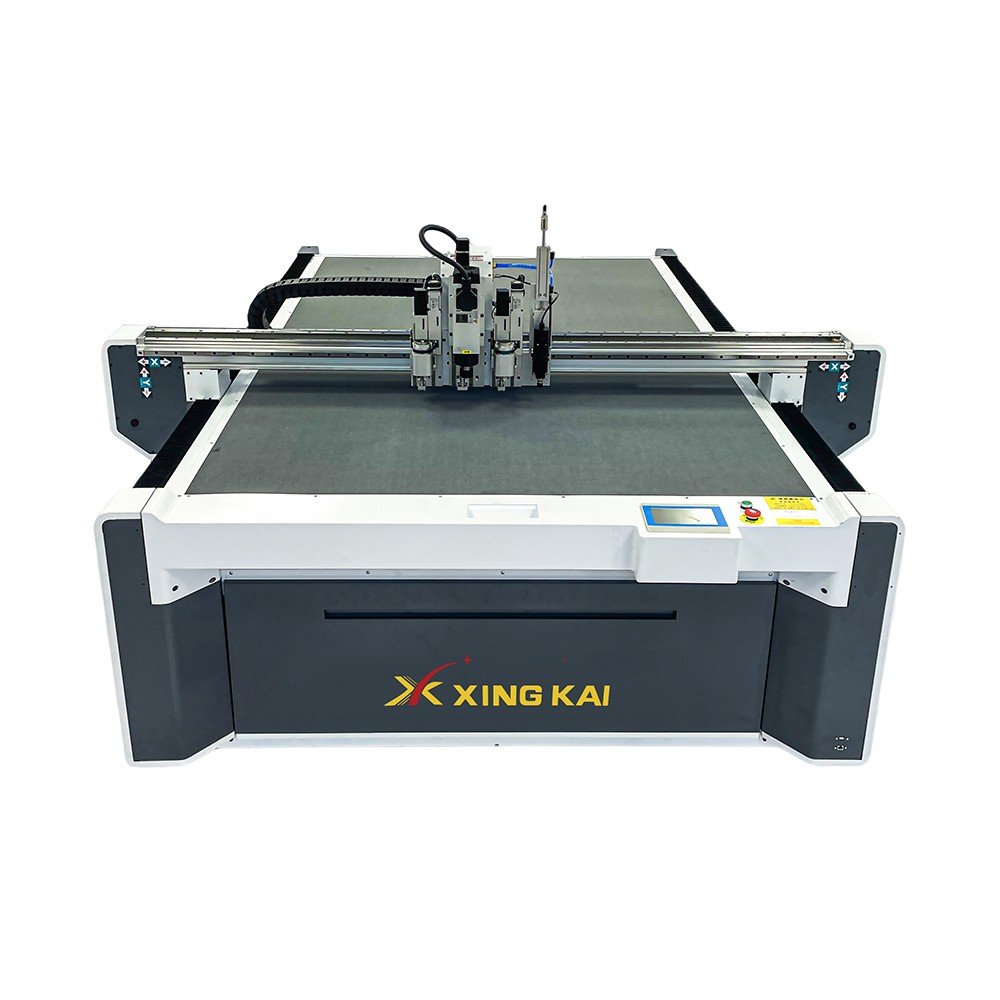
A CNC EVA foam cutting machine reads a vector file and moves the selected tool along the programmed path. The oscillating knife vibrates through the foam while vacuum adsorption holds the sheet flat. Operators can assign separate paths for through-cuts, partial cuts, marking, creasing or V-cuts when the finished product requires them.
Material Holding
Vacuum zones should be selected to match the usable sheet area. Good holding improves contour accuracy and keeps small pieces from moving while interior features are cut.
Files and Cutting Paths
Use clean vector artwork and cut internal holes before the outside profile. Nesting multiple parts in one sheet reduces offcuts and gives the operator a predictable production process.
Tool Selection for EVA Foam Cutting
| Material Situation | Processing Need | Recommended Approach | Check Before Production |
|---|---|---|---|
| Standard EVA sheet | Through-cut custom shapes | Oscillating knife | Blade depth and edge quality |
| Thicker or denser EVA | Stable full-depth cutting | Test a suitable oscillating tool | Compression and complete separation |
| Laminated or adhesive-backed EVA | Protect the surface layer | Sharp blade with controlled pressure | Surface lifting and adhesive behavior |
| Folded or structured foam display | Cut plus fold preparation | Knife with suitable auxiliary process | Whether the material supports the intended fold |
Practical EVA Foam Cutting Workflow
- Confirm the material: record foam grade, thickness, density, surface and required finished edge.
- Prepare the vector file: separate cut, mark and auxiliary paths before importing.
- Place and secure the sheet: activate the appropriate vacuum zones and confirm stability.
- Run a sample: inspect cut-through, edge quality, small details and waste removal.
- Start production: save the approved settings with the material name for repeat jobs.
Common EVA Foam Cutting Problems
| Problem | Likely Cause | What to Adjust |
|---|---|---|
| Rough or torn edge | Worn blade or unsuitable settings | Use a sharp blade and retest speed and pressure |
| Foam is compressed | Excessive downward force | Reduce pressure and confirm tool depth |
| Incomplete cut | Insufficient depth or unsuitable blade | Test depth and tool selection on an offcut |
| Small parts move | Weak vacuum support or poor cut order | Improve holding and cut internal features first |
EVA Foam Applications
EVA foam cutting supports protective packaging inserts, tool-control trays, sports padding, footwear components, case interiors, electronic-product protection and custom industrial cushions. The value of digital cutting is not only the final edge: it also enables fast revisions when a product, case or packaging layout changes.
Choosing an EVA Foam Cutting Machine
Working Area
Match the table size to your regular EVA sheet size, rather than only the smallest parts you currently cut.
Tool Configuration
Choose tooling around the foam grades, thicknesses and secondary processes your actual jobs require.
Sample Testing and Equipment Selection
Send a representative sheet and cutting file for testing before choosing a setup. Explore the EVA Foam Cutting Machine for foam packaging and custom-shape production, or review the CNC Foam Cutting Machine for broader foam applications.
Frequently Asked Questions
Can an EVA foam cutting machine make custom inserts?
Yes. A vector file can define the outer profile, internal cavities and multiple nested parts for custom insert layouts.
Does EVA foam cutting require a die?
Digital knife cutting does not require a physical die for each design, which makes it suitable for samples and changing product dimensions.
What should be provided for sample testing?
Provide the EVA foam sample, thickness, density if known, sheet size and a vector drawing or finished-part requirement.
Get an EVA Foam Cutting Solution
Send your EVA foam type, thickness, sheet size and cutting drawing for configuration advice and sample cutting.

