Work Hours
Monday to Friday: 7AM - 7PM
Weekend: 10AM - 5PM

Vibrating Knife Cutting Machine
Home / Products / Vibrating Knife Cutting Machine
Vibrating Knife Cutting Machine

Vibrating Knife Cutting Machine XK1625 Automatic CNC Digital Cutter with Large Format Vision Camera
The XK1625 vibrating knife cutting machine features a large format vision camera for automatic image capture, contour recognition…
Oscillating Knife Cutting Machine Automatic CNC Digital Cutter with Vacuum Adsorption System XK1625
The automatic CNC oscillating knife cutting machine delivers fast, precise and die free digital cutting. Its vacuum adsorption…
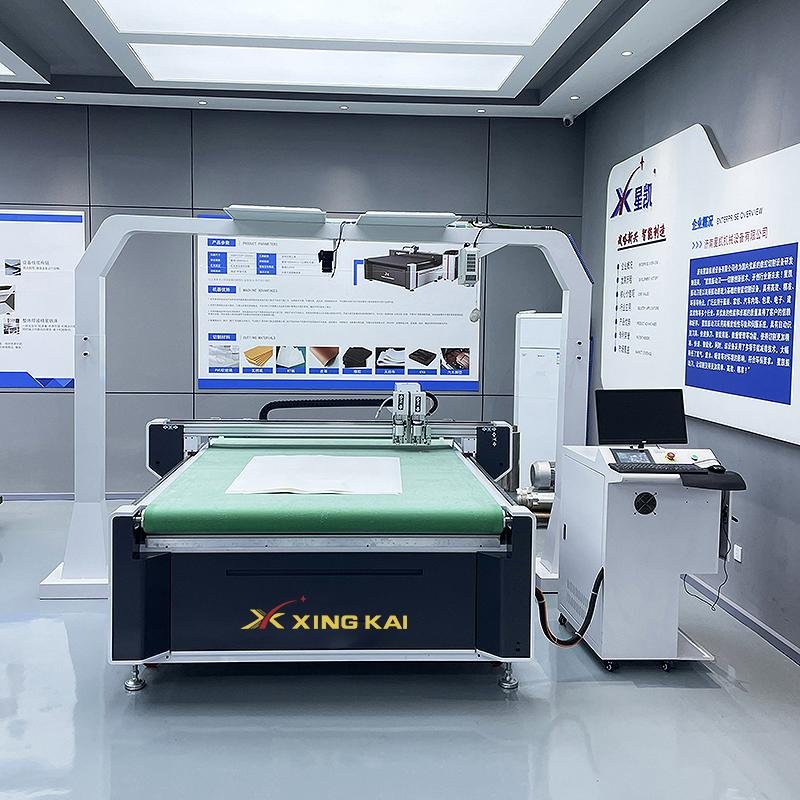
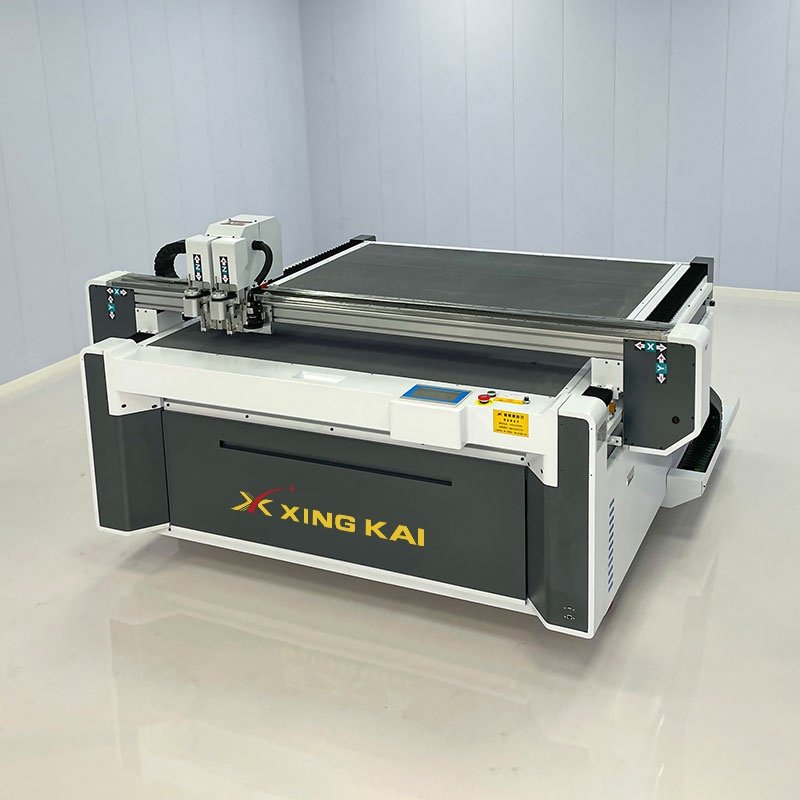
Automatic CNC Knife Cutting Machine: Intelligent Cutting Solutions for Flexible Materials
Can traditional manual cutting no longer meet your requirements for production efficiency and accuracy? Are you experiencing burnt edges, discoloration, smoke, or unpleasant odors when cutting flexible materials with a laser?
Jinan Xingkai Machinery Equipment Co., Ltd. specializes in digital cutting systems for flexible and semi-rigid non-metallic materials. We provide automatic CNC knife cutting solutions for the packaging, advertising, foam, leather, rubber gasket, automotive interior, and composite material industries.
Xingkai automatic CNC knife cutting machines use a computerized control system to perform cutting, creasing, grooving, punching, marking, and milling according to imported design files. The process generally requires no cutting dies, making it particularly suitable for prototyping, customized processing, product development, and small-batch production with multiple product varieties.
The machines can process corrugated cardboard, honeycomb board, EVA, EPE foam, PU foam, sponge, PVC, rubber, silicone, leather, felt, cork, carpet, carbon fiber, fiberglass, aramid fiber, prepreg, and other flexible materials.
Simply provide the material, thickness, cutting size, and application. Xingkai will recommend a suitable working area, tool combination, and automation configuration for your production requirements.
What Is an Automatic CNC Knife Cutting Machine?
An automatic CNC knife cutting machine is a digital processing system controlled by computer numerical control technology. It is also known as an oscillating knife cutting machine, digital cutter, flatbed cutter, die-less cutting machine, cutting plotter, or CNC knife cutter.
After importing DXF, PLT, AI, and other common file formats into the control software, the system controls the cutting head along the programmed paths to process standard or irregularly shaped parts.
Depending on the material and application, the machine can be equipped with:
- High-frequency oscillating knife
- Drag knife
- Rotary knife
- Bevel-cutting tool
- Creasing wheel
- Punching tool
- Milling tool
- Marking pen
- CCD vision positioning system
- Projection positioning system
Compared with conventional die cutting, a digital cutting machine reduces the need to manufacture, store, and manage cutting dies. It allows manufacturers to respond more quickly to design changes and is suitable for complex shapes, multiple specifications, and frequently changing order quantities.
What Materials Can a Xingkai CNC Knife Cutting Machine Process?
Depending on the machine configuration and installed tools, it can process the following materials.
Packaging Materials
- Corrugated cardboard
- Honeycomb board
- Greyboard
- Cardstock
- Coated paper
- Corrugated plastic board
- EVA inserts
- EPE foam
- Foam packaging materials
Advertising Materials
- KT board
- PVC foam board
- Self-adhesive vinyl
- Reflective film
- Vehicle graphics
- Display boards
- Corrugated plastic sheets
- Flexible advertising materials
Foam Materials
- EVA foam
- EPE foam
- PU foam
- Sponge
- Filter foam
- Acoustic foam
- Closed-cell foam
- Laminated foam
Leather Materials
- Genuine leather
- PU leather
- PVC synthetic leather
- Artificial leather
- Automotive seat leather
- Sofa leather
- Footwear and bag materials
Rubber and Sealing Materials
- Natural rubber
- Silicone
- EPDM
- Neoprene
- Non-asbestos gasket sheets
- Rubberized cork
- Industrial sealing materials
- Flexible gasket materials
Composite Materials
- Carbon fiber
- Fiberglass
- Aramid fiber
- Prepreg
- Industrial fiber materials
- Flexible composite materials
The actual cutting capacity depends on the material’s thickness, density, hardness, and structure, as well as the selected cutting tool. We recommend arranging a free cutting test before purchasing a machine for special materials.
What Types of Automatic CNC Knife Cutting Machines Are Available?
Based on their main applications, Xingkai digital cutting machines include:
- Packaging board cutting machines
- Corrugated carton sample makers
- Honeycomb board cutting machines
- Advertising material cutting machines
- Foam cutting machines
- EVA cutting machines
- EPE foam cutting machines
- Sponge cutting machines
- Leather cutting machines
- Automotive floor mat cutting machines
- Rubber gasket cutting machines
- Industrial sealing material cutting machines
- Carpet cutting machines
- Felt cutting machines
- Carbon fiber cutting machines
- Fiberglass cutting machines
- Aramid fiber cutting machines
- Prepreg cutting machines
These names generally describe different application solutions. By changing the processing tools and adjusting the software parameters, one digital cutting platform can process multiple types of materials.
What Industries Use CNC Knife Cutting Machines?
Packaging and Carton Industry
In the packaging industry, CNC knife cutting machines can process printed and unprinted corrugated cardboard, honeycomb board, greyboard, cardstock, EVA, and foam inserts.
The creasing wheel first creates fold lines on the cardboard. The system then automatically switches to the oscillating knife to cut the outer contour. After cutting, the cardboard can be easily removed and folded along the crease lines to form a packaging box.
Typical applications include:
- Carton prototyping
- Customized packaging boxes
- POP and POS displays
- Honeycomb board packaging
- Corrugated cardboard displays
- EVA packaging inserts
- Foam protective inserts
- Tool case inserts
- Small-batch packaging production
- Contour cutting of printed packaging
Compared with traditional die cutting, digital cutting makes it easier to modify dimensions and structures. It is suitable for packaging design companies, carton factories, and customized packaging manufacturers.
Advertising and Signage Industry
The advertising industry frequently requires different shapes, patterns, and dimensions. Using digital design files, the machine can cut lettering, graphics, signs, and complex contours.
Typical applications include:
- Outdoor advertising signs
- Store display products
- Exhibition display boards
- Traffic signs
- Illuminated sign components
- Stickers and labels
- Floor graphics
- Printed advertising contours
- POP display stands
With an optional CCD vision positioning system, the machine can recognize printed registration marks and automatically correct the cutting path according to the actual position of the printed graphics.
Foam and Packaging Insert Industry
For multi-product and small-batch foam processing, conventional cutting dies increase preparation time and initial costs. A digital cutting machine can process different product shapes directly from CAD files.
Typical applications include:
- EVA inserts
- EPE foam packaging
- Tool case inserts
- Instrument protection inserts
- Equipment cushioning pads
- Acoustic foam
- Filter materials
- Customized foam components
- Electronic product packaging inserts
Leather and Upholstered Furniture Industry
The digital cutting system can process genuine leather, synthetic leather, and laminated leather. It can also automatically nest and cut parts according to different product designs.
Typical applications include:
- Shoe uppers
- Bags
- Handbags
- Sofas
- Upholstered furniture
- Automotive seats
- Leather decorative parts
- Leather accessories
With a projection or vision recognition system, operators can identify the leather contour and visible defects. Parts can then be positioned according to the actual condition of the material to improve leather utilization.
Automotive Interior Industry
Xingkai CNC knife cutting machines can digitally process automotive floor mats, trunk mats, seat materials, sound insulation materials, and sealing products.
Typical applications include:
- Automotive floor mats
- Trunk mats
- Automotive carpets
- Car seat materials
- Sound insulation materials
- EVA interior components
- Automotive sealing pads
- Automotive composite parts
Digital cutting files can be saved and reused, making it easier to manufacture products for different vehicle models and specifications.
Rubber Gasket and Sealing Industry
An oscillating knife cutting machine can use CAD files to process circular, square, irregular, and perforated sealing components.
Typical applications include:
- Flange gaskets
- Pipeline sealing gaskets
- Rubber sealing rings
- Equipment sealing pads
- Silicone components
- EPDM components
- Customized industrial gaskets
- Small-batch replacement gaskets
There is no need to manufacture a separate cutting die for every shape, making the system suitable for gasket manufacturers handling multiple specifications and changing order quantities.
Composite Materials Industry
By selecting suitable blades and cutting parameters, the machine can process various flexible composite materials.
Typical applications include:
- Carbon fiber prepreg
- Fiberglass
- Aramid fiber
- Industrial composite materials
- Automotive composite parts
- Wind-energy materials
- Sports equipment materials
- Industrial protective materials
The cutting results for special composite materials depend on their fiber structure, resin content, and thickness. A sample test should be conducted to determine the correct machine configuration.
Advantages of Xingkai Automatic CNC Knife Cutting Machines
1. No Conventional Cutting Dies Required
Processing files can be imported directly into the software. This is suitable for production environments where dimensions, shapes, and order quantities frequently change, helping reduce die-making time and die-management costs.
2. No Burnt Cutting Edges
The machine uses a physical knife-cutting process. It avoids common heat-related problems such as burnt or discolored edges and is suitable for materials with strict appearance and edge-quality requirements.
3. Multiple Tools on One Machine
The machine can be equipped with an oscillating knife, drag knife, rotary knife, creasing wheel, bevel-cutting tool, punching tool, milling tool, and marking pen.
4. Intelligent Automatic Nesting
The nesting software optimizes the layout based on the part shapes and material dimensions, reducing unnecessary gaps and offcuts to improve material utilization.
5. Consistent Cutting Quality
The machine processes materials according to digital design files, reducing dimensional errors caused by manual measurement and hand cutting while maintaining better consistency throughout each batch.
6. Vacuum Material Hold-Down
The vacuum system holds the material securely on the cutting table, reducing movement, lifting, and deformation during processing.
7. Printed Contour Cutting
With an optional CCD camera, the machine can recognize printed registration marks and graphic contours. It is suitable for packaging, advertising boards, labels, stickers, and other printed materials.
8. Safety Protection
The machine is equipped with an emergency-stop button and safety sensors. When a person or obstacle is detected within the protected area, the machine can stop its movement immediately.
9. Multiple Working Sizes
Standard working areas include:
700mm × 1000mm, 1200mm × 1200mm, 1600mm × 1000mm, 1600mm × 1500mm, 1300mm × 2500mm, 1600mm × 2500mm, and 1800mm × 3000mm.
Xingkai can also provide other working sizes according to the customer’s material dimensions and production requirements.
What Processes Can the Xingkai Digital Cutting System Perform?
Depending on the machine configuration, the system can perform:
- Through-cutting
- Kiss-cutting
- Creasing
- V-grooving
- Punching
- Marking
- Drawing
- Milling
- Printed contour recognition
- Automatic feeding
- Continuous cutting
The multifunctional cutting head can accommodate several processing tools. During one production task, the system can automatically switch between different operations, reducing manual tool changes and secondary positioning.
How to Select the Right Cutting Tool
High-Frequency Oscillating Knife
The oscillating knife cuts materials through rapid up-and-down blade movement. It is suitable for flexible materials with a certain thickness, elasticity, or toughness.
Common materials include:
- Corrugated cardboard
- Honeycomb board
- EVA
- EPE foam
- PU foam
- Sponge
- Rubber
- Leather
- Carpet
- Felt
- PVC foam board
- Corrugated plastic board
The blade length, thickness, edge shape, and cutting angle should be selected according to the material’s thickness and density.
Multi-Angle Bevel-Cutting Tool
The bevel-cutting tool is mainly used to produce angled edges and V-shaped grooves. Different blade angles can be selected depending on the tool model.
Common materials include:
- Honeycomb board
- Corrugated cardboard
- Greyboard
- Cardstock
- PVC board
- Foam board
The available cutting angles and maximum material thickness depend on the specific tool configuration.
Creasing Wheel
The creasing wheel applies controlled pressure to create fold lines on the material. It is commonly used for packaging boxes and display stands.
Common materials include:
- Corrugated cardboard
- Greyboard
- Cardstock
- Coated paper
- Corrugated plastic board
Different creasing wheels and pressure settings can be selected according to the board thickness, flute structure, and required crease width.
Rotary Knife
The rotary knife uses a rotating blade to reduce cutting resistance. It is suitable for certain flexible, breathable, and fibrous materials that may move when cut with other tools.
Common materials include:
- Nonwoven materials
- Felt
- Fiberglass
- Aramid fiber
- Thin composite materials
- Industrial fiber materials
Drag Knife
The drag knife is suitable for relatively thin and simple flexible materials.
Common materials include:
- Cardstock
- Self-adhesive materials
- Stickers
- Flexible films
- Thin plastics
- Synthetic leather
- Soft PVC
It is generally recommended for materials no thicker than 5mm. The actual cutting capacity also depends on the material hardness and blade type.
Milling Tool
The milling tool uses a high-speed rotating cutter to process certain rigid non-metallic materials. It can perform contour cutting, grooving, and partial milling.
Common materials include:
- PVC foam board
- ABS plastic
- Acrylic
- Aluminum composite panels
- Insulation boards
- MDF
- Other rigid non-metallic boards
A suitable dust extraction system should be used when processing materials that generate dust.
CCD Vision Positioning System
The CCD camera recognizes registration marks or printed contours on the material.
Typical applications include:
- Printed cardboard
- Packaging boxes
- Labels
- Stickers
- Advertising boards
- Printed leather
- Digitally printed materials
The system corrects the cutting path according to the actual printed position, reducing misalignment caused by material placement or printing deviations.
How Can Digital Cutting Improve Production?
Reduced Dependence on Cutting Dies
Oscillating knives and other digital tools reduce the need for conventional cutting dies in prototype and small-batch production, shortening the preparation time required for new products.
Processing of Complex Shapes
For products with frequently changing dimensions, complex contours, or designs that are difficult to process with ordinary dies, users can modify the digital file and begin cutting again.
Fewer Manual Errors
The system repeatedly follows programmed cutting paths, reducing the influence of operator experience, fatigue, and manual measurement on product accuracy.
Improved Material Utilization
Automatic nesting rearranges parts according to their shapes and minimizes unused areas and leftover material.
Suitable for Multi-Product Production
When changing products, operators generally only need to select another file and adjust the processing parameters. A new cutting die is not required for every product.
Easier Production Data Management
Digital design files and processing parameters can be saved and reused, making repeat orders, specification management, and standardized production easier.
How to Select the Right Xingkai CNC Knife Cutting Machine
To recommend an accurate machine configuration, please confirm the following information:
- What material do you need to cut?
- What is the maximum material thickness?
- Is the material supplied in sheets or rolls?
- What are the length and width of the material?
- Do you require single-layer or small multi-layer cutting?
- Is automatic feeding required?
- Do you require creasing, grooving, punching, or milling?
- Do you need to cut printed graphics?
- What is the estimated daily production volume?
- What voltage and frequency are used in your factory?
If you are unsure which configuration to select, send your material photographs, finished-product photographs, and design files to Xingkai. Our technical team will recommend a suitable solution based on your actual processing requirements.
How to Buy a Xingkai Automatic CNC Knife Cutting Machine
Step 1: Submit Your Processing Requirements
Please provide the material, thickness, cutting size, finished-product application, and estimated production volume.
Step 2: Confirm the Machine Configuration
Xingkai will recommend a suitable working area, cutting-tool combination, vacuum system, and feeding method based on the material properties, product structure, and production requirements.
Step 3: Arrange a Material Cutting Test
Customers can send materials and design files to us. We will arrange a cutting test and provide cutting videos, finished results, or samples for evaluation.
Step 4: Receive a Formal Quotation
After confirming the configuration, we will provide a detailed quotation covering the machine specifications, functions, price, production time, shipping method, and trade terms.
Step 5: Confirm the Order
Both parties will confirm the technical specifications, payment terms, delivery schedule, shipping conditions, and after-sales service before signing the sales contract.
Step 6: Start Production
After receiving the signed contract and deposit, we will arrange production according to the confirmed configuration and provide progress updates.
Step 7: Inspection and Machine Testing
After assembly, the machine will undergo software testing, motion testing, functional inspection, and material cutting tests to ensure that it operates correctly.
Step 8: Packaging and Shipping
After customer confirmation, the machine will be securely packed according to international shipping requirements and dispatched under the agreed terms.
Step 9: Installation, Training, and Technical Support
Xingkai provides operating manuals, installation guidance, video training, and remote technical support to help customers complete installation, commissioning, operation, and routine maintenance.
Safety Precautions for CNC Knife Cutting Machines
- Before starting the machine, check the cutting table and movement area for tools or other obstacles.
- Select a suitable blade and set the correct speed, depth, and tool parameters according to the material.
- Confirm the drawing scale, part dimensions, cutting path, and material position before processing.
- Do not enter the movement range of the gantry or cutting head while the machine is operating.
- Stop the machine and disconnect the relevant power supply before replacing blades or tools.
- Stop the machine immediately if unusual sounds, material movement, insufficient vacuum pressure, or cutting deviations occur.
- Regularly inspect the blades, tool holders, guide rails, transmission system, vacuum pump, and safety sensors.
- Use the correct dust extraction equipment when milling materials that generate dust.
- Untrained personnel must not operate the machine independently.
- Operate and maintain the machine according to the instructions provided by Xingkai.
Get a Quotation for a Xingkai Automatic CNC Knife Cutting Machine
The price of an automatic CNC knife cutting machine depends on the working area, cutting tools, vacuum system, automatic feeding device, CCD vision positioning system, and other optional functions.
To help us recommend the correct configuration quickly, please provide:
Material | Thickness | Cutting Size | Application
Jinan Xingkai Machinery Equipment Co., Ltd. will recommend a suitable automatic CNC knife cutting solution based on your material and actual production requirements and provide a detailed machine configuration and quotation.

