Work Hours
Monday to Friday: 7AM - 7PM
Weekend: 10AM - 5PM

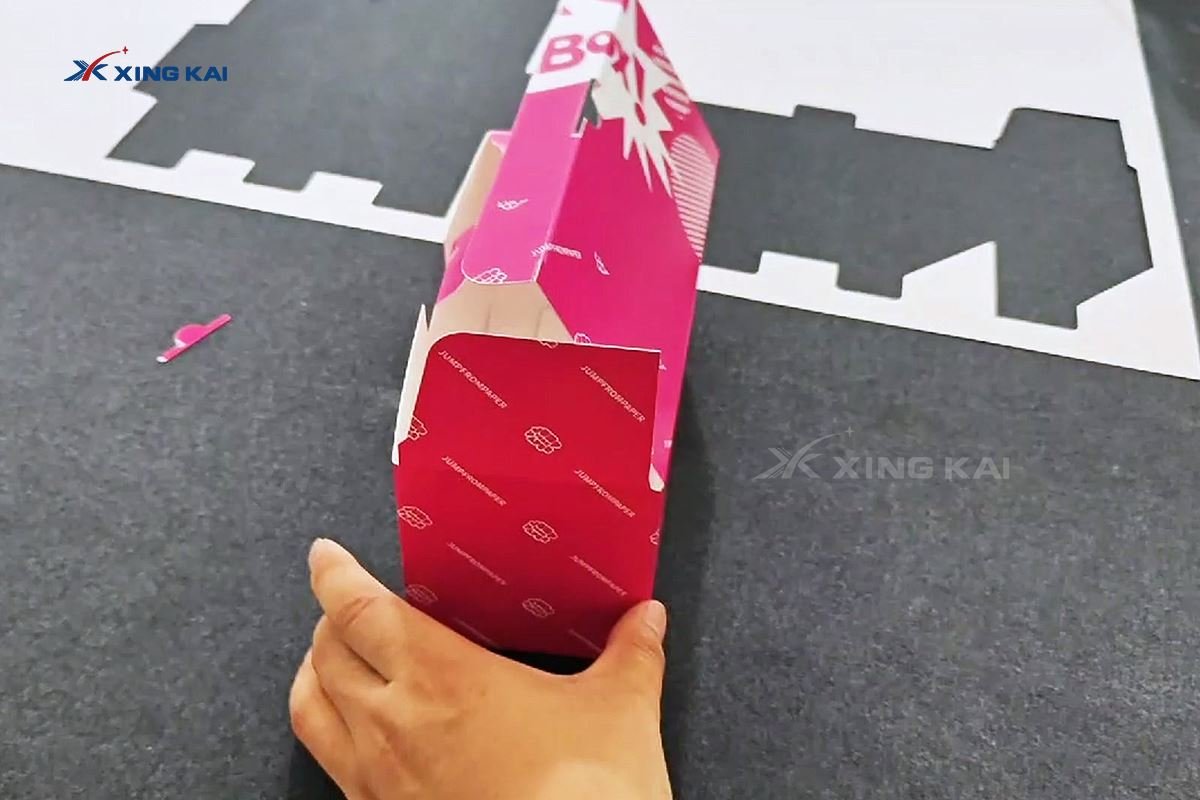
White cardboard is a widely used packaging material for folding cartons, gift boxes, cosmetic boxes, food packaging, retail displays, and product sample packaging. Its smooth printable surface and practical stiffness make it a familiar choice for brands that need packaging to protect a product and communicate a clear visual identity. For packaging suppliers, print shops, and carton sample makers, the production challenge is not only cutting a sheet. It is turning a digital design into an accurate carton blank with clean contours, fold lines, tabs, slots, and a reliable final fit.
A CNC oscillating knife cutting machine provides a digital method for processing white cardboard packaging. It follows a file-based cutting path, allowing an operator to prepare carton samples and custom packaging structures without producing a physical cutting die for every new design. This makes digital cardboard cutting especially useful for packaging development, prototype work, short runs, and projects where the structure may change after customer review.
Why White Cardboard Is Used in Packaging
White cardboard packaging is valued for its clean appearance and broad design flexibility. It can carry printed graphics, colors, product information, and branding while still being converted into a practical box structure. Depending on the project, white cardboard can be used for folding cartons, promotional boxes, cosmetic packaging, stationery packaging, food cartons, subscription box samples, and point-of-sale display components. A successful carton needs the correct shape, a stable folding sequence, and sufficient room for the packaged product.
Because packaging development often involves several adjustments, the ability to create physical samples quickly is important. A brand may want to compare box heights, opening styles, display windows, internal inserts, or flap designs before finalizing production. A digital packaging cutting machine helps turn these revisions into tangible carton samples. Designers can review real dimensions and assembly behavior instead of relying only on a screen drawing.
CNC Oscillating Knife Cutting for Carton Samples
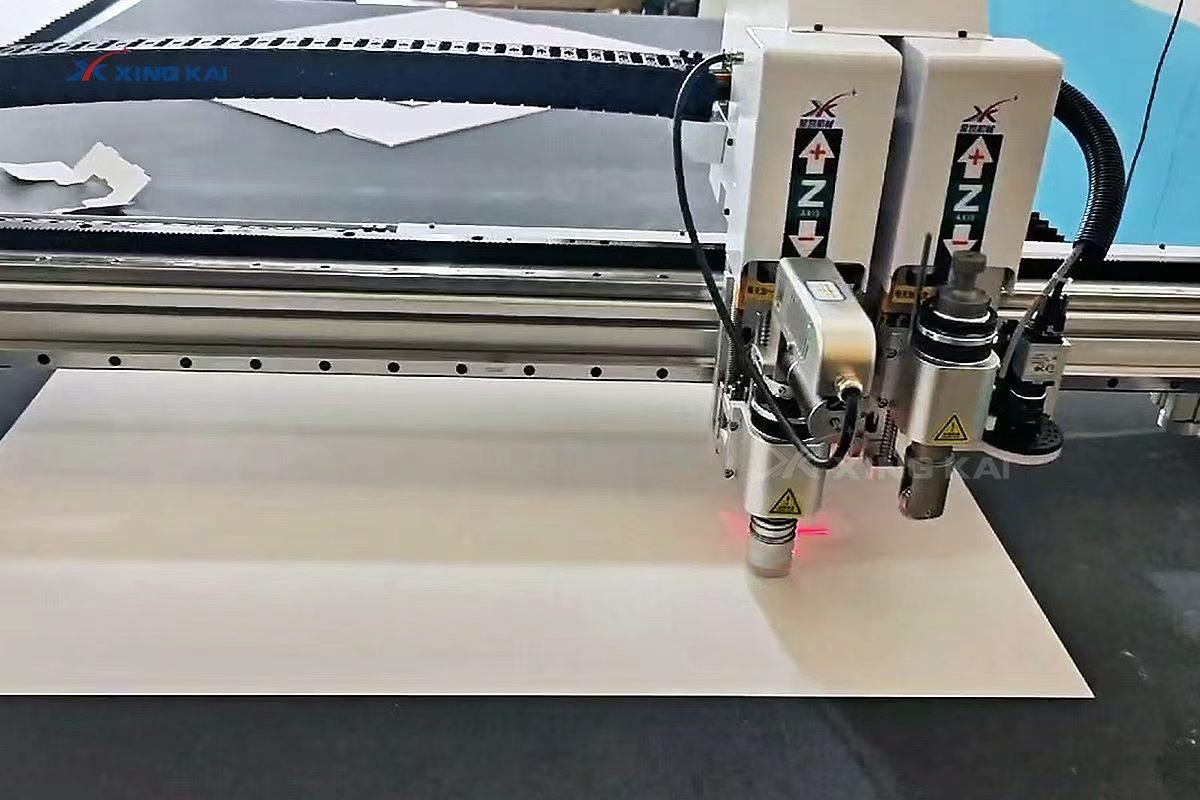
A CNC cardboard cutting machine uses digital files to guide the cutting process. The file can define an outside contour, crease line, fold line, locking tab, product window, hanging hole, internal insert, or other packaging detail. With the right tooling and setup for the selected white cardboard, the cutting table can process a layout that is ready to be folded into a packaging prototype. This supports clear communication between brand owners, packaging designers, and production teams.
The oscillating knife is designed for many flexible and semi-rigid sheet materials. For white cardboard packaging, its role is to follow a controlled cutting path and help create detailed carton structures. Creasing or marking tools may also be used where the packaging design requires folds. The final process should always be tested with the actual cardboard grade, print surface, and carton design, because every packaging project has its own material and structural requirements.
Faster Packaging Prototype Development
Packaging prototypes help teams make decisions before volume production begins. A physical white cardboard sample can show whether a product fits correctly, whether the lid closes as intended, whether an insert holds the product in position, and whether the printed graphics are located on the desired panels. It can also help sales teams present packaging concepts to customers with greater confidence.
Traditional die cutting remains important for larger production volumes, but prototype development often needs more flexibility. If a carton design changes, a digital cutting file can be updated and tested again. This reduces the delay between a design revision and a new sample. For custom packaging suppliers, that flexibility supports responsive service for customer approval samples, limited-edition boxes, seasonal packaging, and small batch carton projects.
Packaging Details That Need Precision
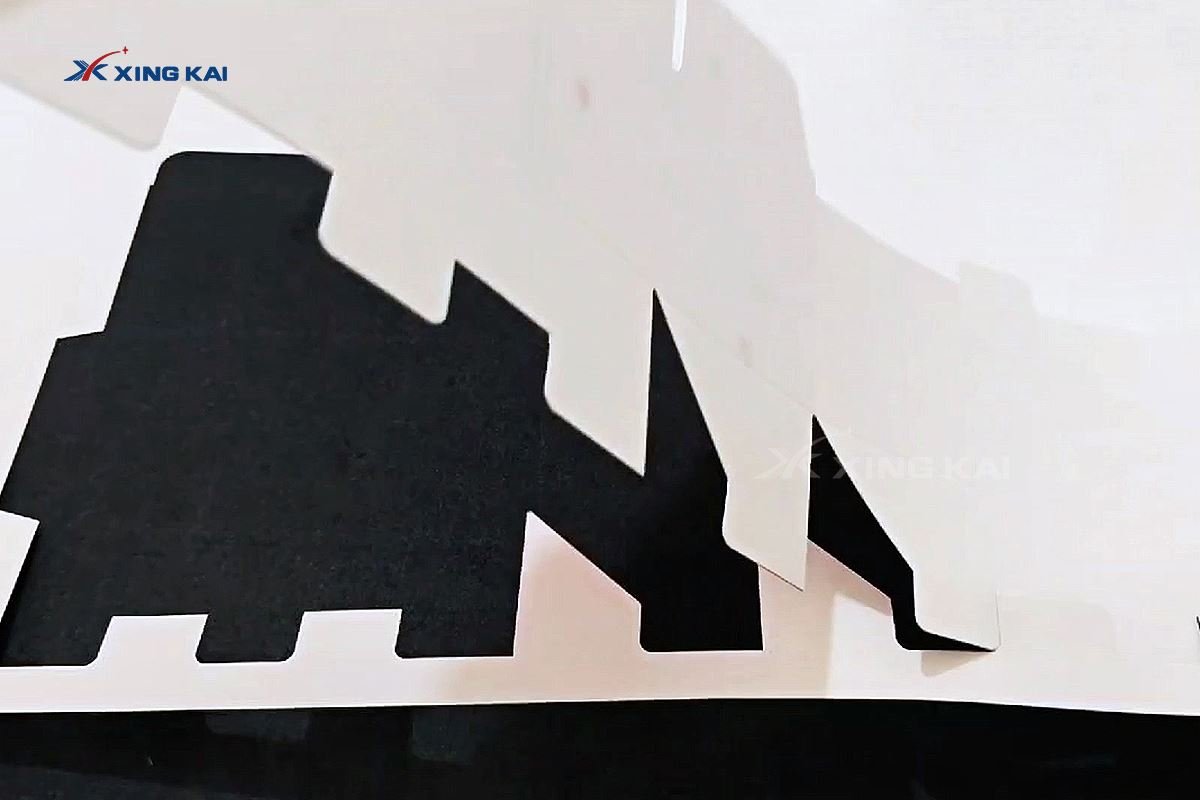
A carton is a combination of connected details. The outer cut line gives the box its shape, but fold lines and tabs determine whether it can be assembled effectively. Small slots, locking features, display windows, and internal supports also need to align with the rest of the layout. When these elements are accurately prepared, the packaging sample better represents the intended production result.
A digital packaging cutting workflow can include cut lines for carton blanks, crease lines for folding, perforation lines where required, and custom cutouts for product visibility or handling. The file can be organized so that interior details are processed before the external outline, helping parts remain stable during cutting. After cutting, components can be sorted by project or design version and assembled for inspection.
Applications for White Cardboard Packaging
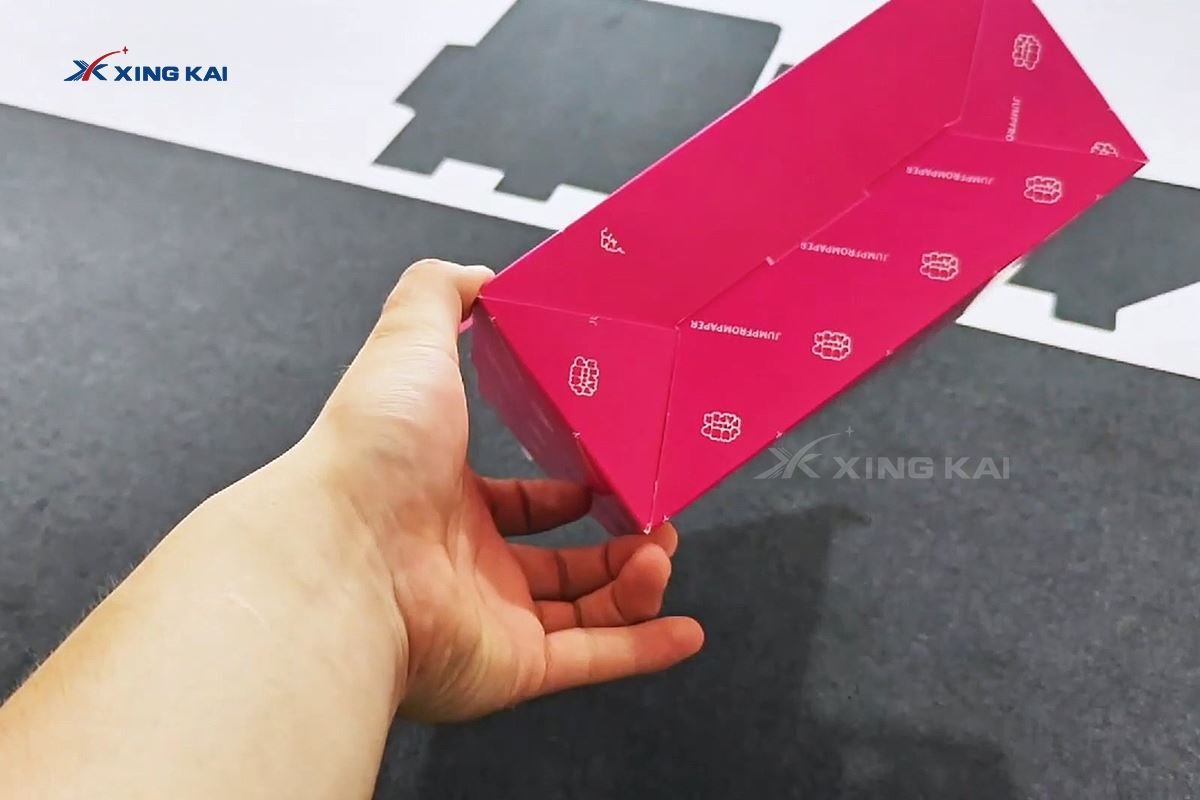
White cardboard cutting is relevant across many packaging applications. Cosmetics and skincare brands use folding cartons to create a premium first impression. Food and beverage companies need packaging samples for new product sizes and retail concepts. Electronics accessories, toys, gifts, candles, stationery, and household products can all require custom cartons or inserts. Retail display packaging may also use white cardboard for countertop structures, hanging displays, and promotional presentation pieces.
For each application, the packaging design can be adapted to the product. A digital cutting machine can support different carton dimensions, custom openings, shaped windows, product inserts, and branded structures. This versatility is useful when suppliers need to make one-off prototypes as well as repeatable short-run packaging designs.
A Practical Digital Workflow for Packaging
A reliable white cardboard packaging workflow starts with a clear design file and a representative material sample. Before full sample production, it is sensible to test the cut quality, crease performance, folding behavior, and assembly fit. The team can then review carton dimensions, tab engagement, product protection, visual presentation, and print-area alignment. Any required change can be made in the digital layout before the next sample is cut.
Clear file naming and sample labeling are also helpful. Organizing files by product, material, size, and design version reduces the risk of producing the wrong carton layout. Keeping a confirmed digital file creates a reusable record for future samples, customer projects, or short-run packaging work. This is particularly valuable in busy packaging environments where several designs may be moving through development at the same time.
White Cardboard Cutting Machine for Packaging Innovation
Packaging is where product protection, brand presentation, and production efficiency meet. A CNC oscillating knife cutting machine gives packaging teams a flexible way to process white cardboard for carton prototypes and custom packaging structures. It helps bridge the gap between a digital concept and a foldable, review-ready physical sample.
For packaging sample makers, carton designers, print shops, and custom box suppliers, digital white cardboard cutting supports faster iteration and more flexible product development. From a simple folding carton to a detailed custom package with inserts and display features, the right digital cutting workflow can help turn packaging ideas into accurate samples ready for evaluation and the next stage of production.

