Work Hours
Monday to Friday: 7AM - 7PM
Weekend: 10AM - 5PM

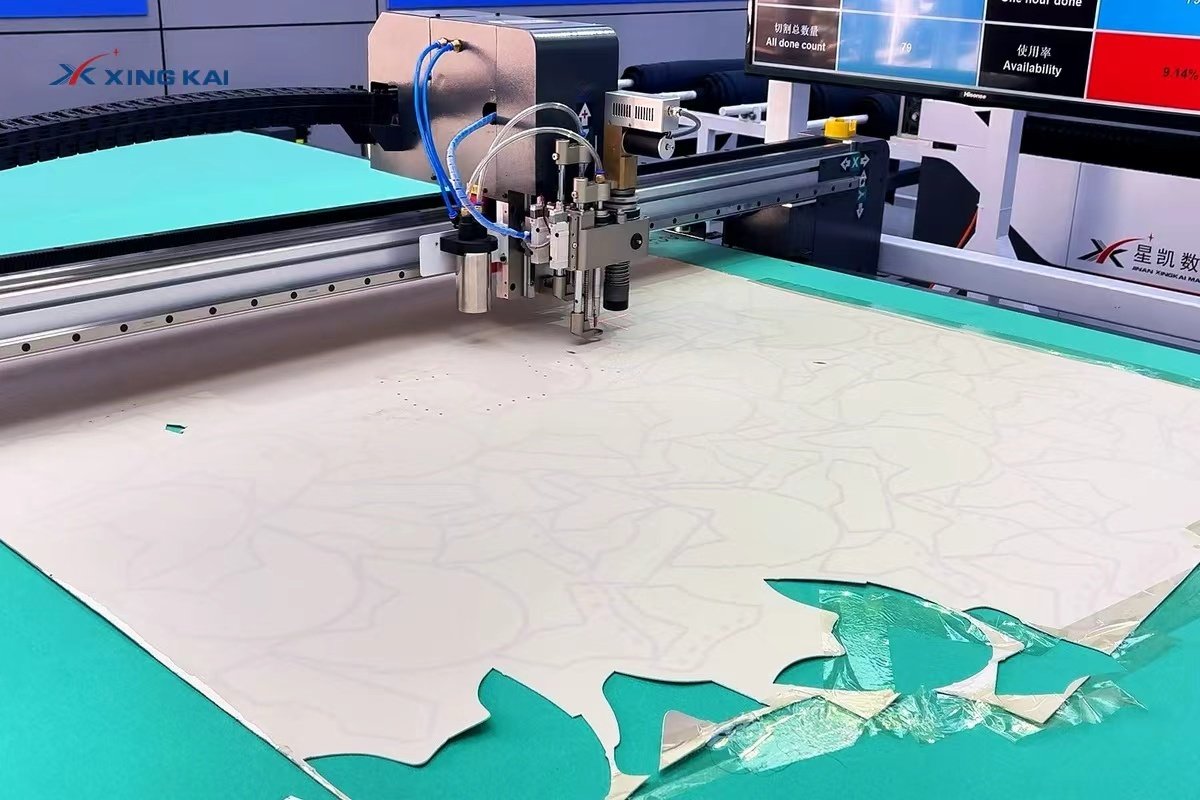
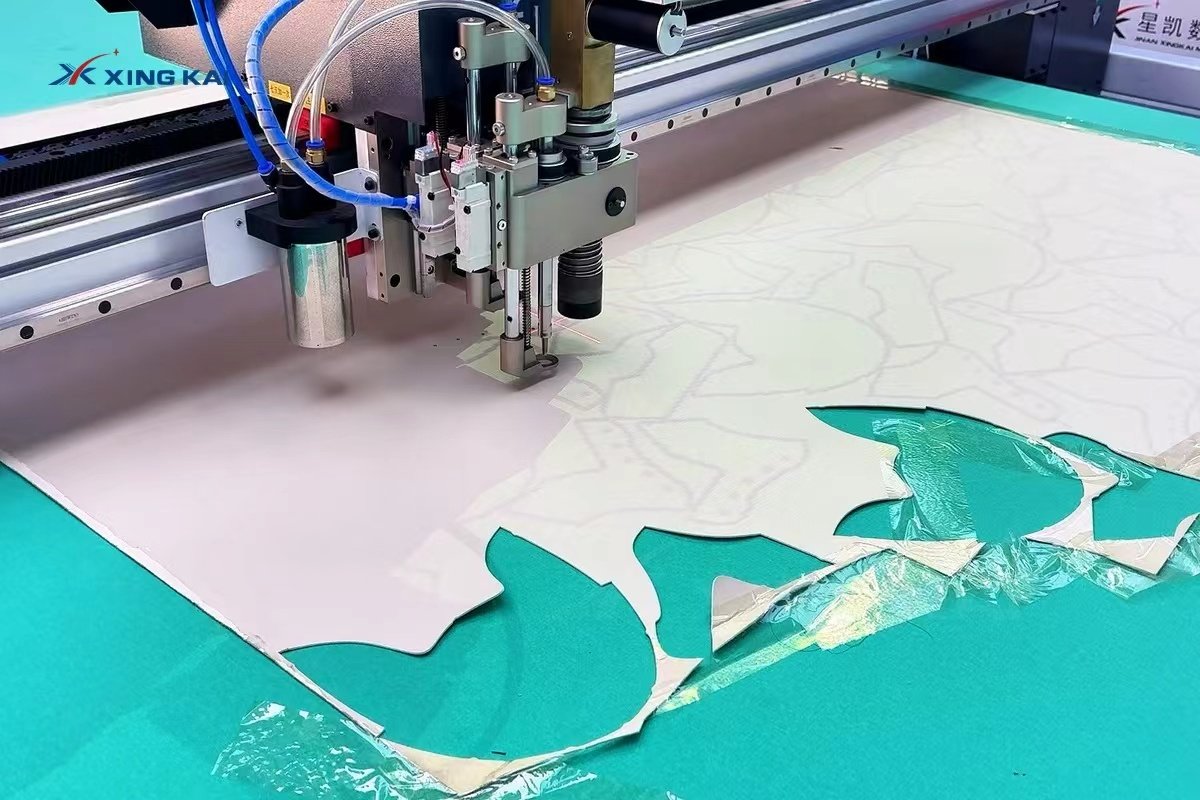
An artificial leather cutting machine uses a CNC oscillating knife, vacuum adsorption and digital nesting to cut PU leather, microfiber leather and other synthetic leather materials without cutting dies. It is suited to upholstery, automotive interiors, bags, footwear and flexible production where patterns change often and clean edges matter.
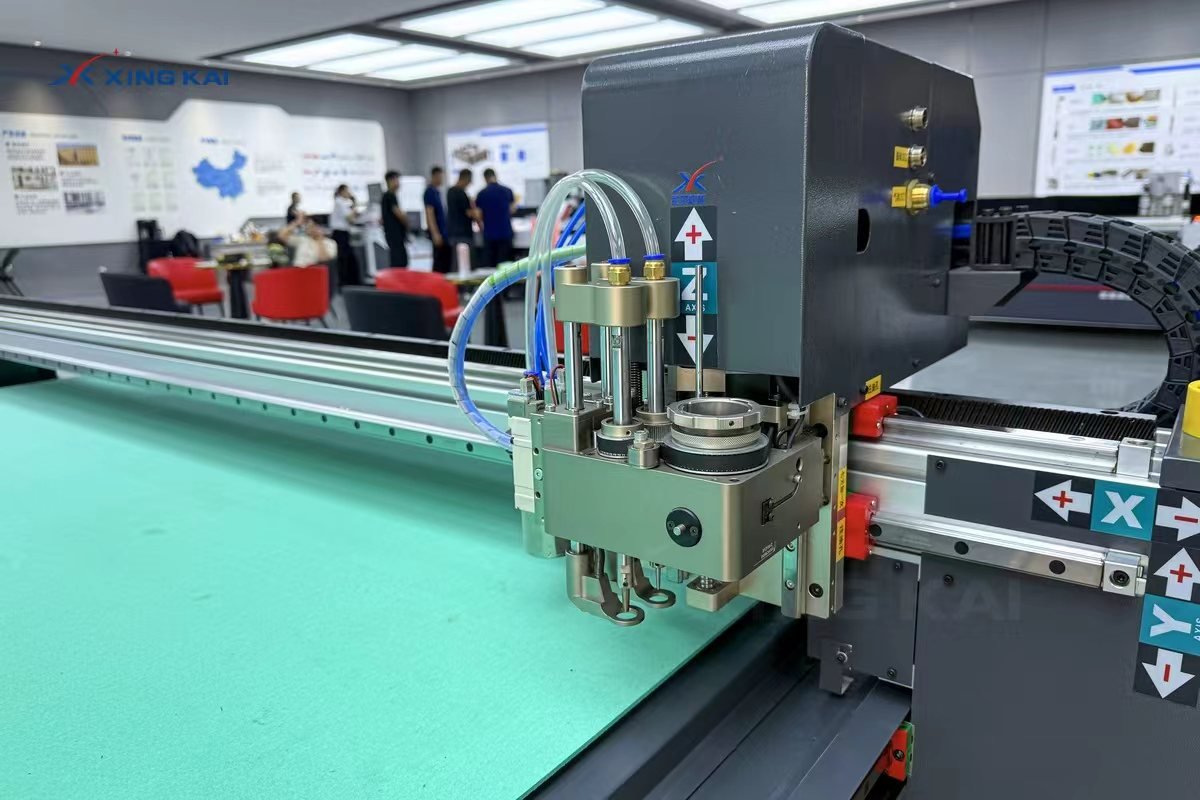
Table of Contents
What Is Artificial Leather Cutting?
Artificial leather cutting means turning flat PU, microfiber PU, synthetic leather or laminated leather sheets and rolls into production parts. Typical parts include seat covers, sofa panels, door trims, bag panels, straps, shoe uppers, reinforcement pieces and decorative components. The material can be flexible, coated, backed, stretchy or printed, so stable holding and the correct tool setting are essential.
Why a physical blade is preferred
An oscillating knife cuts mechanically rather than with laser heat. This helps preserve the coating and surface appearance of PU leather while avoiding heat-related melting, scorching and odor. Final edge quality still depends on the material structure, blade selection and tested cutting settings.
Why Use CNC Knife Cutting for Artificial Leather?
| Method | Best for | Advantage | Limitation |
|---|---|---|---|
| Manual cutting | Simple prototypes | Low initial equipment cost | Slow and difficult to keep consistent at scale |
| Die cutting | Long-running fixed styles | Fast repeat production | New dies are needed when the pattern changes |
| CNC oscillating knife | Samples, varied styles and repeat batches | Digital patterns, nesting, contour cutting and no cutting dies | Requires material testing and correct vacuum/tool setup |
A CNC artificial leather cutting machine imports the digital file, nests the parts and follows the cutting path automatically. This lets production teams revise a size, add a hole or change a contour without waiting for a new die.
Leather Cutting Machine Parameters for PU and Artificial Leather
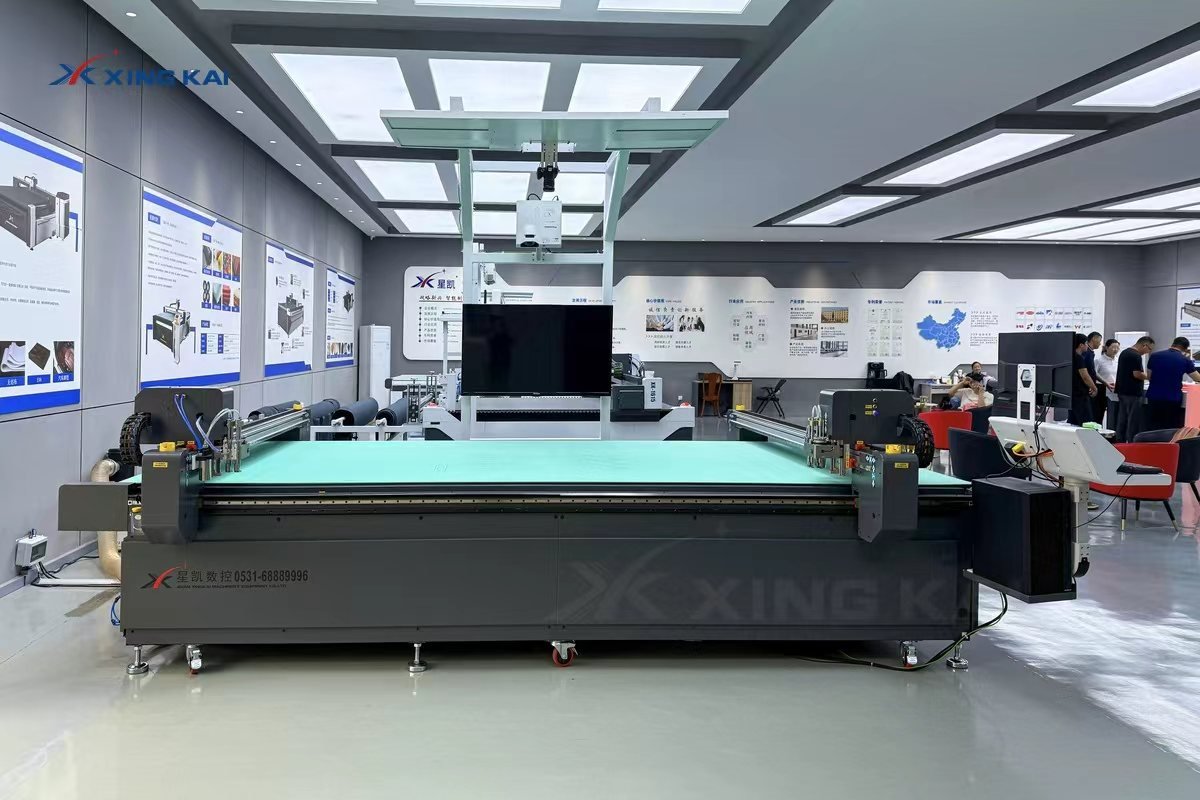
The following values are the standard published configuration for Xingkai’s XK1625 PU leather cutting machine. Production results depend on material hardness, backing, thickness, pattern complexity and tool selection; a sample cut should confirm the final configuration.
| Parameter | XK1625 specification |
|---|---|
| Effective cutting area | 1600 × 2500 mm |
| Cutting speed | Up to 1800 mm/s; actual speed depends on material and pattern |
| Cutting thickness | Up to 20 mm, depending on material hardness and density |
| Cutting accuracy | ±0.1 mm |
| Material holding | Vacuum adsorption with reverse air blowing |
| File formats | DXF and HPGL |
| Motion system | Servo motor drive and precision linear guide rails |
| Vacuum pump | 7.5 kW or 9 kW |
| Working voltage | AC 220V/380V ±10%, 50 Hz |
| Standard tool | Oscillating knife |
| Optional tools | Pneumatic oscillating knife, rotary tool, punching tool, marking pen and kiss-cut tool |
Nesting, Holding and Cutting Workflow
1. Prepare the pattern file
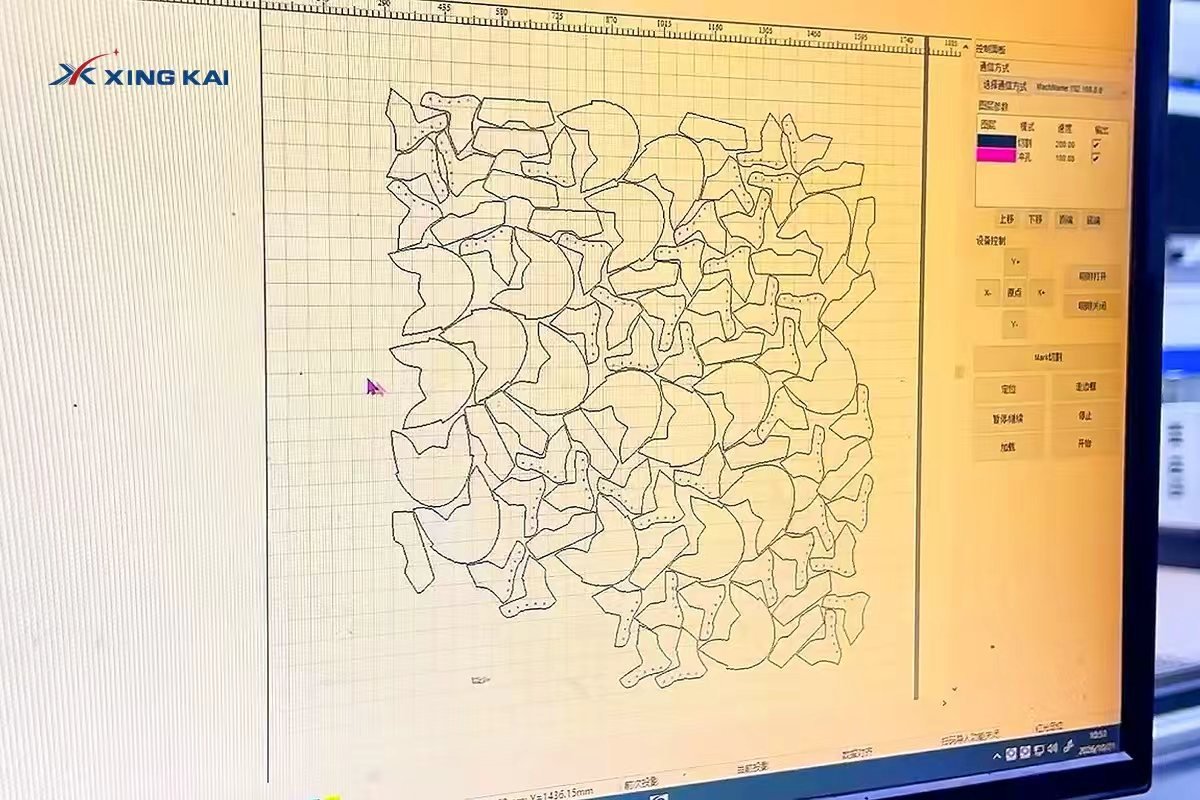
Export clean DXF or HPGL files. Confirm seam allowance, punch positions, grain direction, mirrored parts and any marking requirements before nesting.
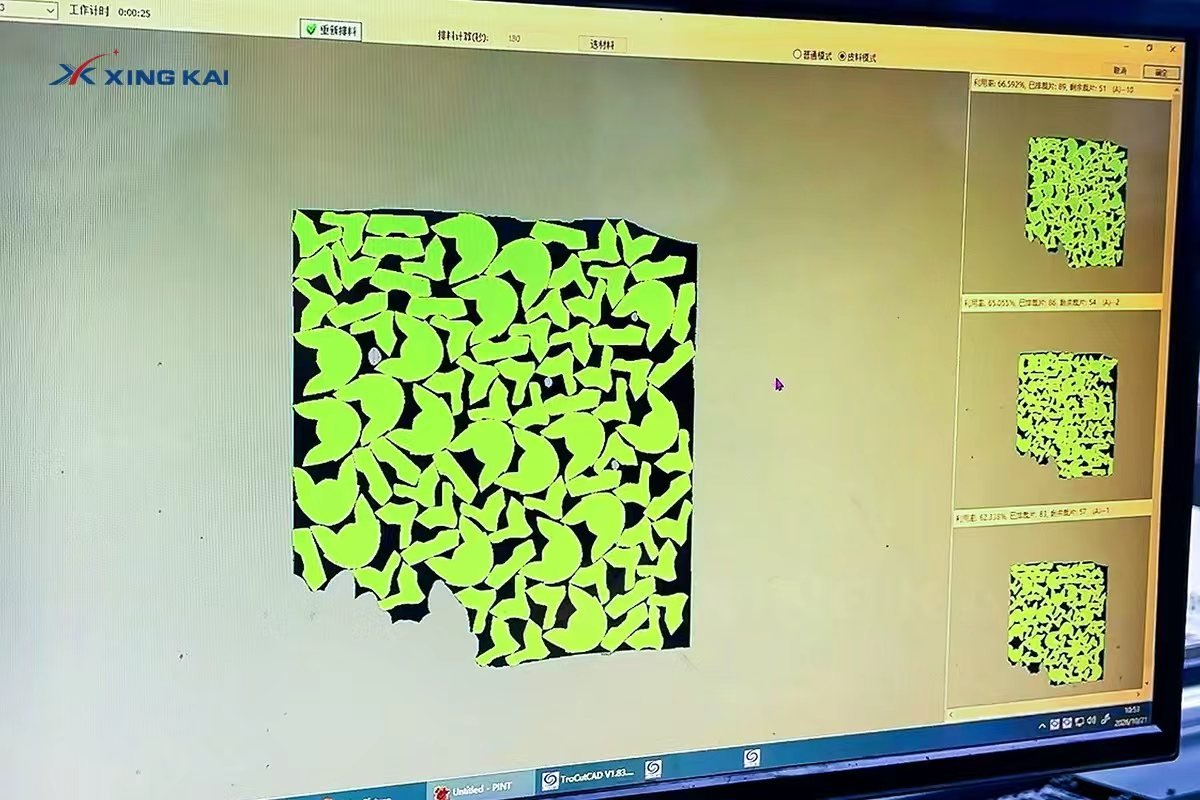
2. Nest parts for material utilization
Automatic nesting places irregular components according to material width, component shape and production priority. For textured PU leather, keep the required direction consistent across matched parts.
3. Hold the material flat
Vacuum adsorption keeps sheet or roll material flat on the table. Select vacuum zones and feeding tension according to the material’s air permeability, elasticity and backing structure.
4. Test cut before batch production
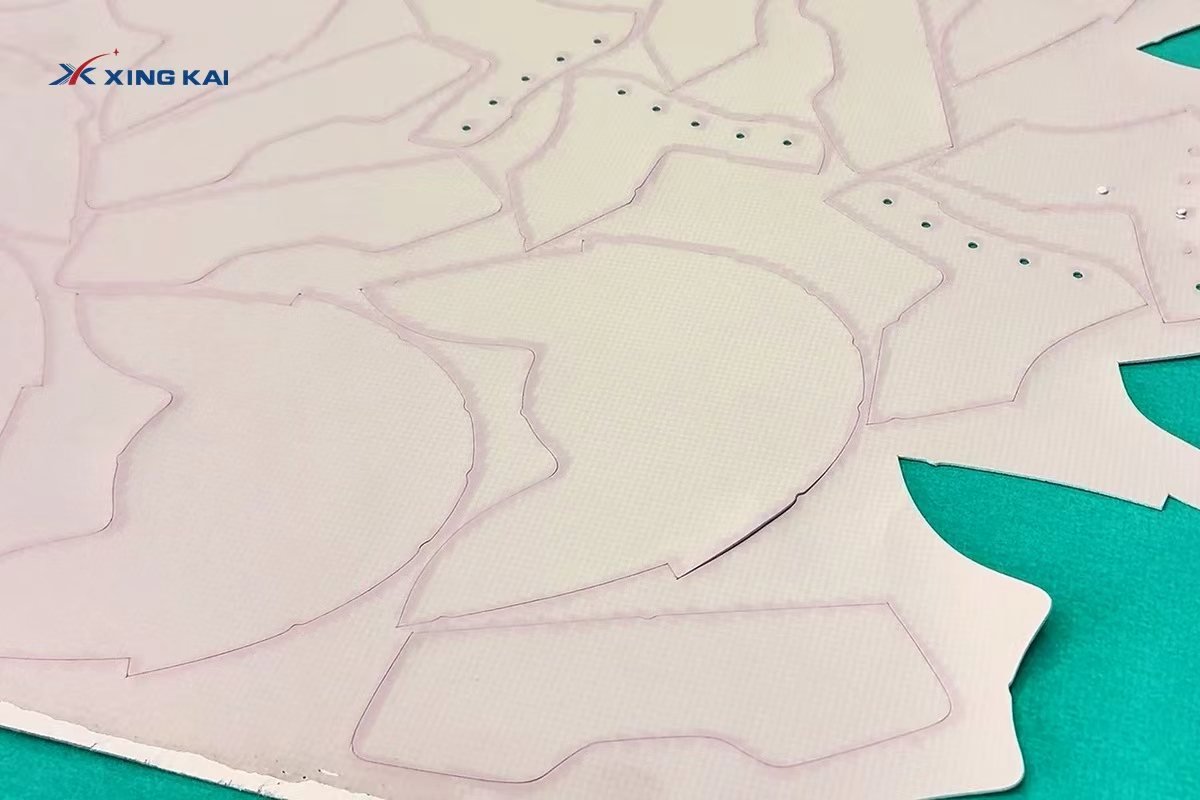
Test the blade type, oscillation setting, speed, pressure and overcut on a representative sample. Inspect sharp corners, small holes, cut-through and edge appearance before starting the production file.
5. Cut, inspect and move to assembly
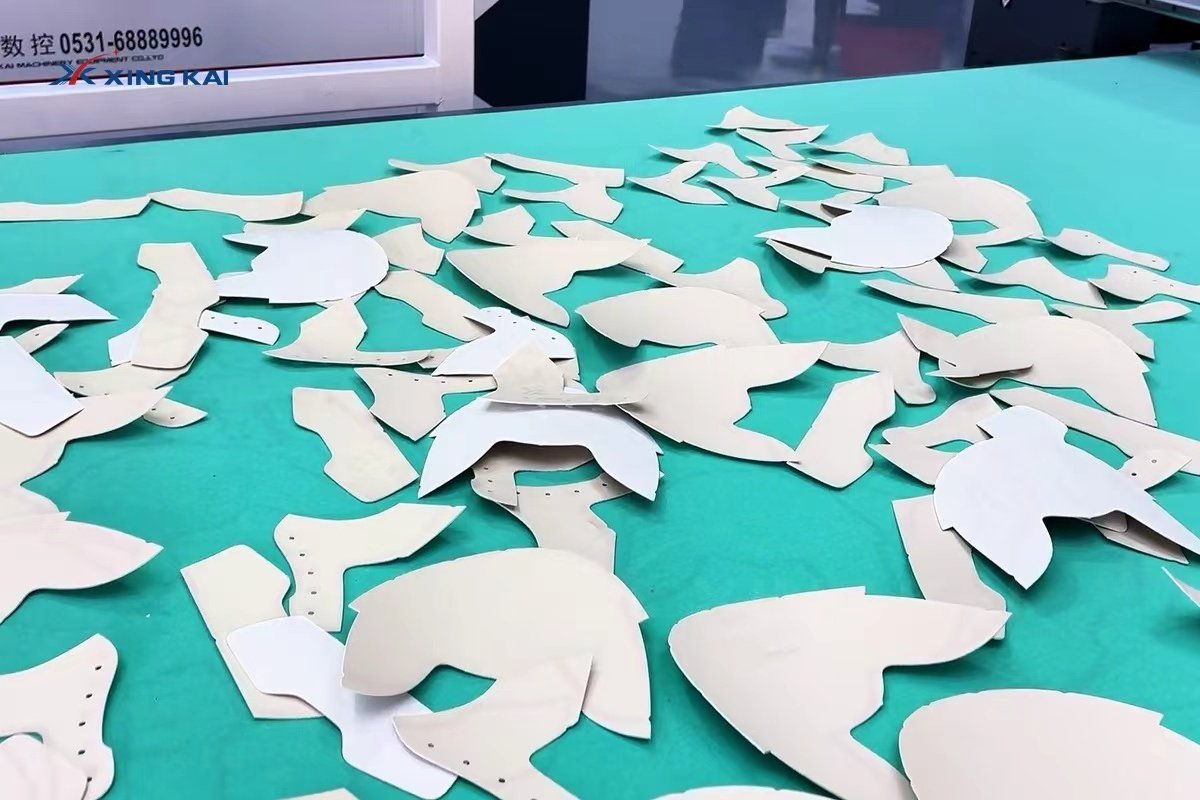
After cutting, check dimensions and any punched or marked references. The finished artificial leather components can then move to sewing, bonding, edge finishing or final assembly.
Industry Applications of Artificial Leather Cutting
Furniture upholstery
Cut sofa covers, cushion panels, chair backs, armrest parts and decorative inserts in repeatable dimensions. Digital files make size changes and made-to-order upholstery easier to manage.
Automotive interiors
Process seat-cover panels, door trim coverings, headrest pieces, armrest coverings and other interior components. Punching and marking tools can provide reference points for downstream sewing and assembly.
Bags, footwear and leather goods
Produce bag panels, straps, pockets, shoe uppers, reinforcements, wallet parts and small accessories. The same machine can handle prototype patterns and repeat orders without changing dies.
How to Choose an Artificial Leather Cutting Machine
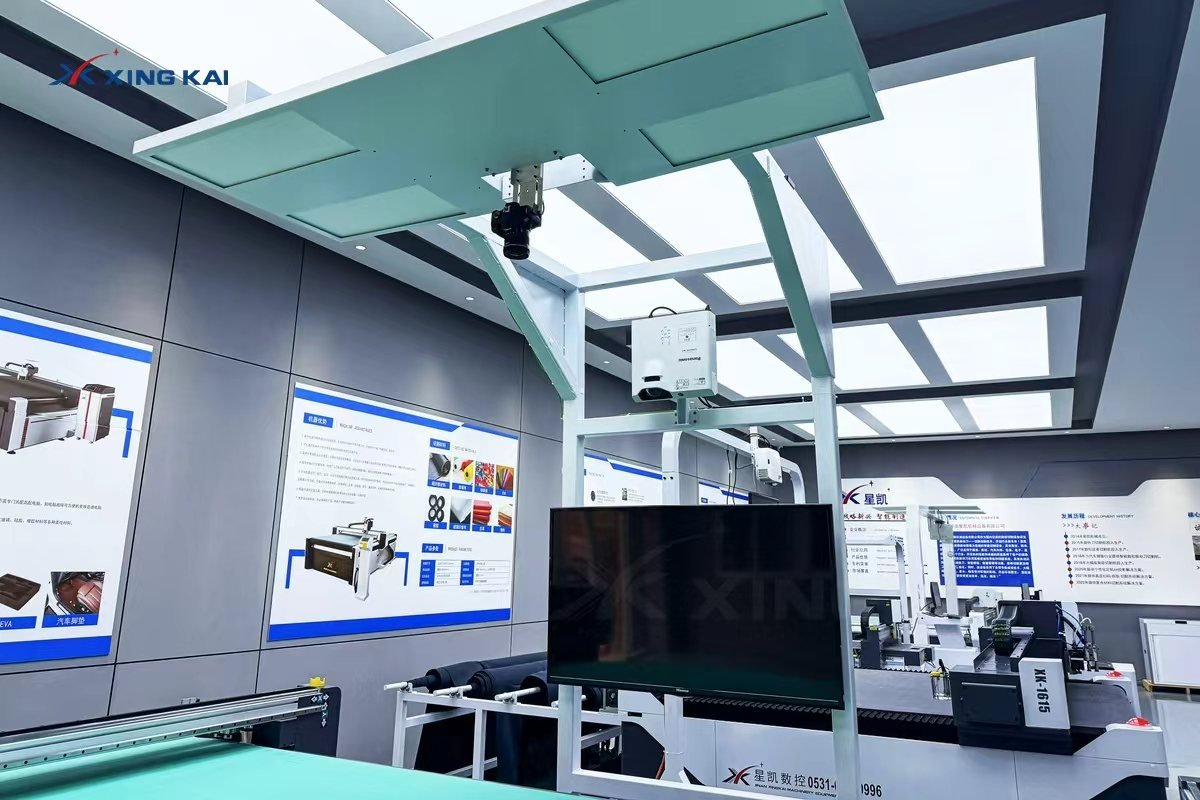
- Working area: select a table that matches the largest pattern and your material width. XK1625 provides 1600 × 2500 mm; other sizes are available for different production needs.
- Sheet or roll processing: fixed tables suit sheets, samples and short runs. A conveyor and automatic feeding system suit continuous roll production.
- Tool configuration: use an oscillating knife for common PU leather; consider a pneumatic knife for thicker, denser or reinforced materials after testing.
- Positioning options: choose punching and marking for assembly references. A camera system can support printed or patterned materials; defect-recognition options can be assessed for natural or variable material surfaces.
- Sample verification: send the material, thickness, roll width, drawings and required daily output to confirm the machine configuration before ordering.
See the dedicated PU leather cutting machine, the genuine leather cutting machine, or our contact page for configuration advice.
Frequently Asked Questions
Can an artificial leather cutting machine cut PU leather?
Yes. The XK1625 configuration is designed for PU leather, synthetic leather, microfiber leather, suede and composite leather. Test cutting is recommended for a new material.
Will an oscillating knife melt PU leather edges?
No laser heat is used. The blade cuts mechanically, which helps avoid heat-related melting and scorching. Correct blade and settings remain important for edge quality.
Can the machine make holes and marks?
Yes. Punching and marking tools are optional and can be added when the part needs sewing references, assembly holes or identification marks.
Request a PU Leather Cutting Test
Send your material type, thickness, working size and cutting drawings for configuration advice and sample cutting. Our team will recommend a suitable artificial leather cutting machine and tool setup.