Work Hours
Monday to Friday: 7AM - 7PM
Weekend: 10AM - 5PM

An EPE foam cutting machine helps packaging manufacturers turn pearl cotton sheets into accurate protective inserts, edge guards, partitions and shaped cushions. CNC oscillating knife cutting is especially useful when the package design changes often, the product has irregular contours or the order does not justify a dedicated die.
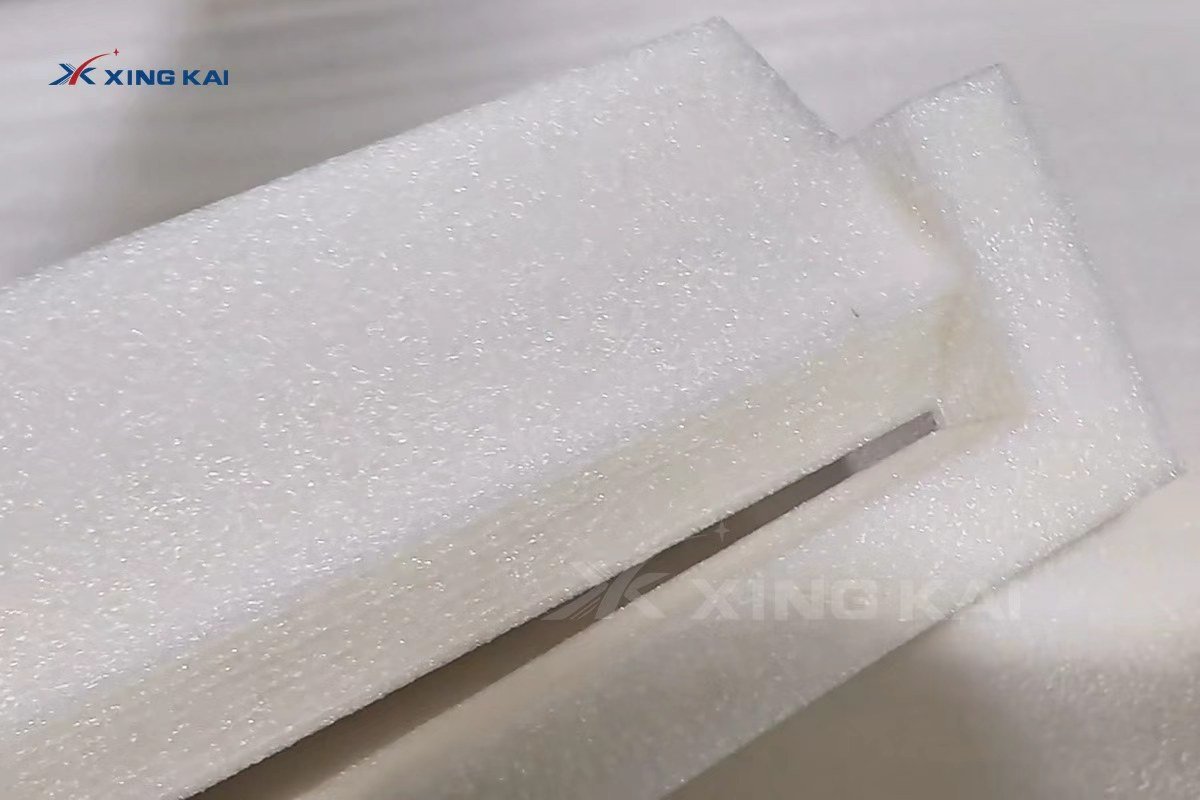
Packaging focus: this guide covers EPE foam cutting for protective packaging inserts used around fragile goods, electronics, tools, appliances and custom boxed products.
Table of Contents
- What Is EPE Foam?
- Why EPE Foam Cutting Matters for Packaging
- EPE Foam Cutting Methods Compared
- How an EPE Foam Cutting Machine Works
- Tool and Holding Selection
- EPE Packaging Insert Workflow
- Common EPE Cutting Problems
- Choosing an EPE Foam Cutting Machine
- Frequently Asked Questions
What Is EPE Foam?
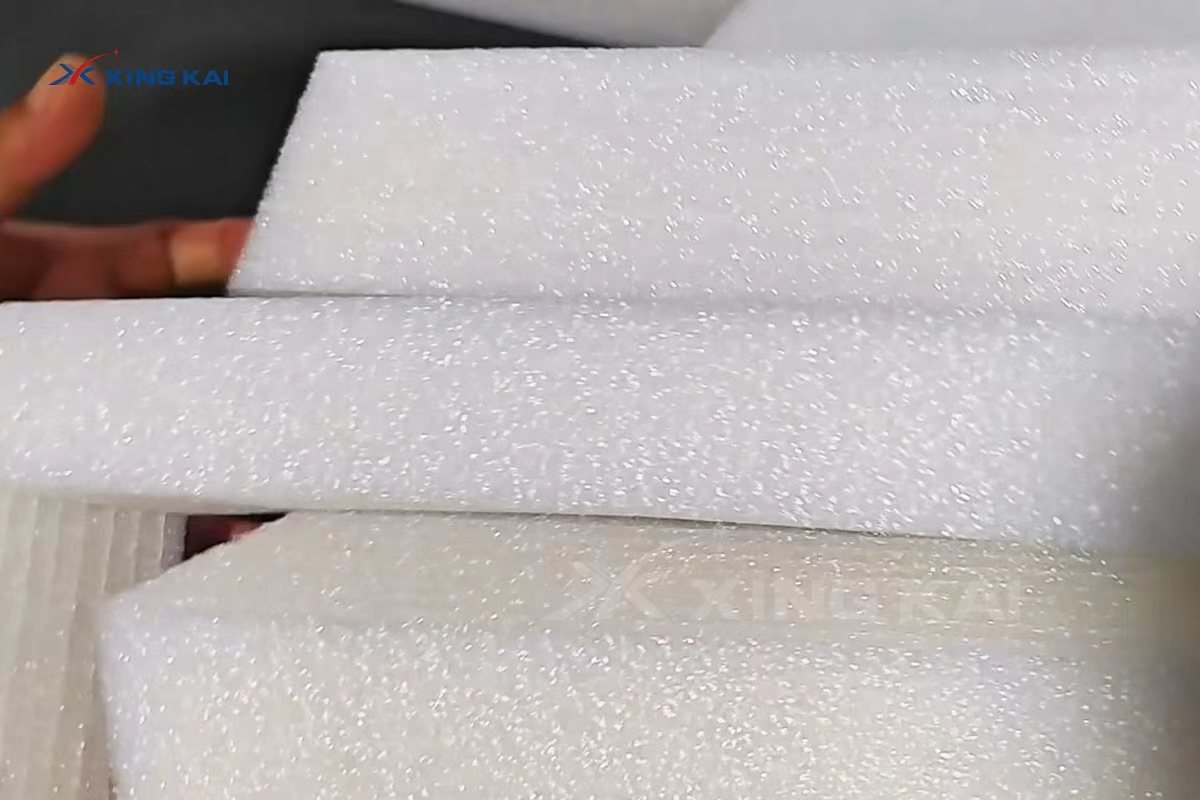
EPE, often called pearl cotton, is expanded polyethylene foam. It is commonly used for cushioning and impact protection in packaging. Depending on the material grade, it can be supplied in sheets, rolls or formed profiles. Read a material overview of expanded polyethylene foam.
Useful Packaging Properties
- Lightweight cushioning material
- Suitable for shaped protective parts
- Available in different sheet thicknesses
- Easy to nest into packaging layouts
Typical Finished Parts
- Product cavities and tray inserts
- Corner and edge protection
- Layered separators and partitions
- Custom protective pads
Why EPE Foam Cutting Matters for Packaging
Protective packaging is effective only when the insert matches the product and the box. A loose cavity can allow movement; an overly tight cavity can make packing difficult. An EPE foam cutting machine uses a digital drawing to create the required outer shape and internal openings, helping packers keep the insert geometry consistent as the order repeats.
It also makes revisions simpler. When a product dimension, cable position or accessory set changes, the packaging team can edit the cutting file and produce a new sample without ordering a new die.
EPE Foam Cutting Methods Compared
| Method | Suitable Work | Advantage | Limitation |
|---|---|---|---|
| Hand cutting | Simple one-off pads | Low initial cost | Slow and inconsistent for cavities |
| Die cutting | Large, stable repeat orders | Fast for one fixed design | New designs require a new die |
| Hot-wire cutting | Selected foam forms | Can suit certain materials | Not ideal for every EPE packaging profile |
| CNC oscillating knife | Custom inserts and changing orders | Cold cutting directly from a file | Requires tested tool and vacuum settings |
How an EPE Foam Cutting Machine Works
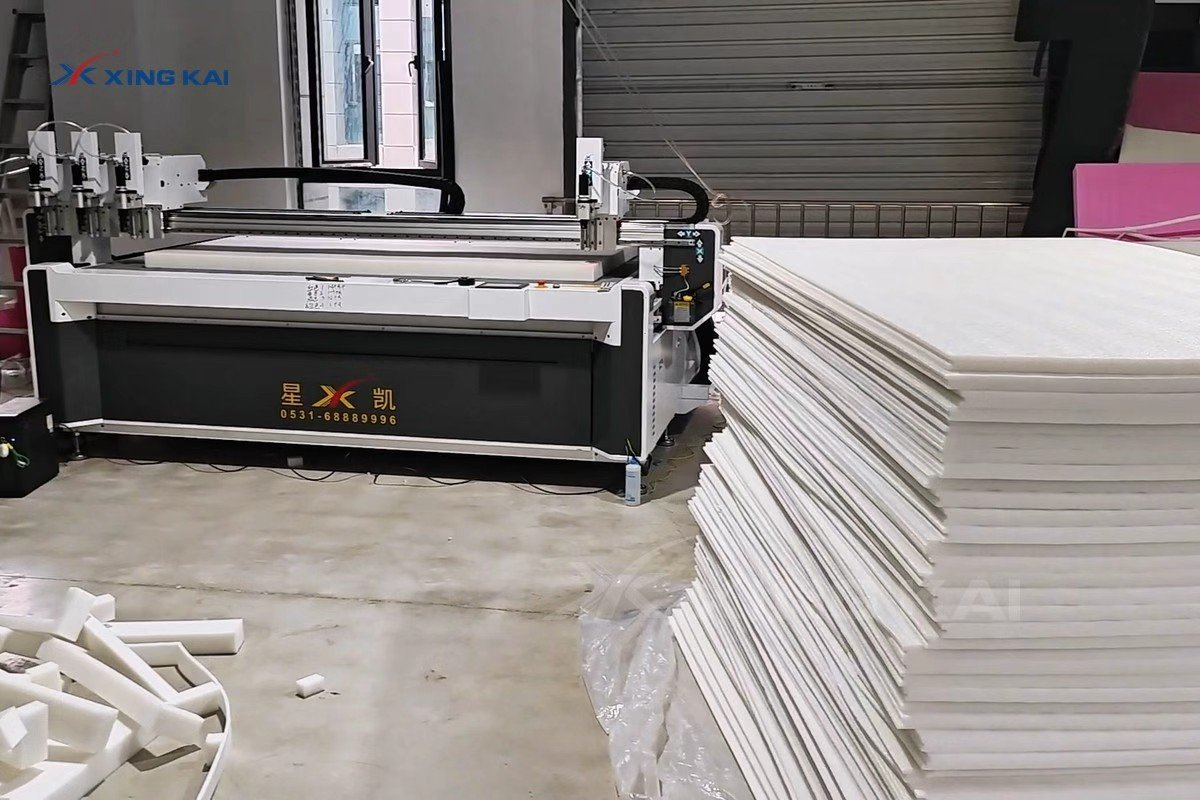
An EPE foam cutting machine imports a vector layout, assigns the cut path and moves an oscillating knife along the programmed geometry. The blade vibrates as it passes through the pearl cotton sheet, while the vacuum table keeps the material stable. The process can create outside contours, slots, cavities and repeat sets in one nested layout.
Cutting Order
Internal holes and product cavities are usually cut before the outside contour. This helps the sheet remain stable until the final separation cut.
Nesting for Material Use
Multiple inserts can be arranged in a single sheet layout. A sensible nesting plan reduces offcuts while retaining enough space for clean part removal.
Tool and Holding Selection
| Material Condition | Processing Need | Recommended Approach | Check Before Batch Cutting |
|---|---|---|---|
| Standard EPE sheet | Simple through-cut inserts | Oscillating knife | Complete cut-through and edge quality |
| Thicker EPE layer | Full-depth cavity or profile | Test a suitable oscillating tool | Compression and separation |
| Small nested parts | Repeated shaped pieces | Vacuum holding with planned cut order | Part movement during cutting |
| Multi-layer packaging set | Separators and matched insert layers | Separate vector paths by layer | Part labels and assembly sequence |
EPE Packaging Insert Workflow
- Measure the product and package: define product dimensions, clearance needs and box size.
- Prepare the cutting drawing: create the outside insert profile and internal cavity paths.
- Place and secure the EPE sheet: match the vacuum zones to the usable material area.
- Run a sample insert: test product fit, cut-through and removal of the finished part.
- Approve and nest the batch: save the approved file and settings for repeat production.
Common EPE Cutting Problems
| Problem | Possible Cause | Adjustment Direction |
|---|---|---|
| Part is not fully separated | Insufficient depth or unsuitable blade | Test depth and tool selection on an offcut |
| Foam edge is compressed | Excess pressure or dull blade | Reduce pressure and inspect blade condition |
| Small parts shift | Weak vacuum holding or poor cut order | Improve holding and cut internal features first |
| Product does not fit cavity | Drawing or clearance requirement is incorrect | Revise the vector file after sample fitting |
Choosing an EPE Foam Cutting Machine
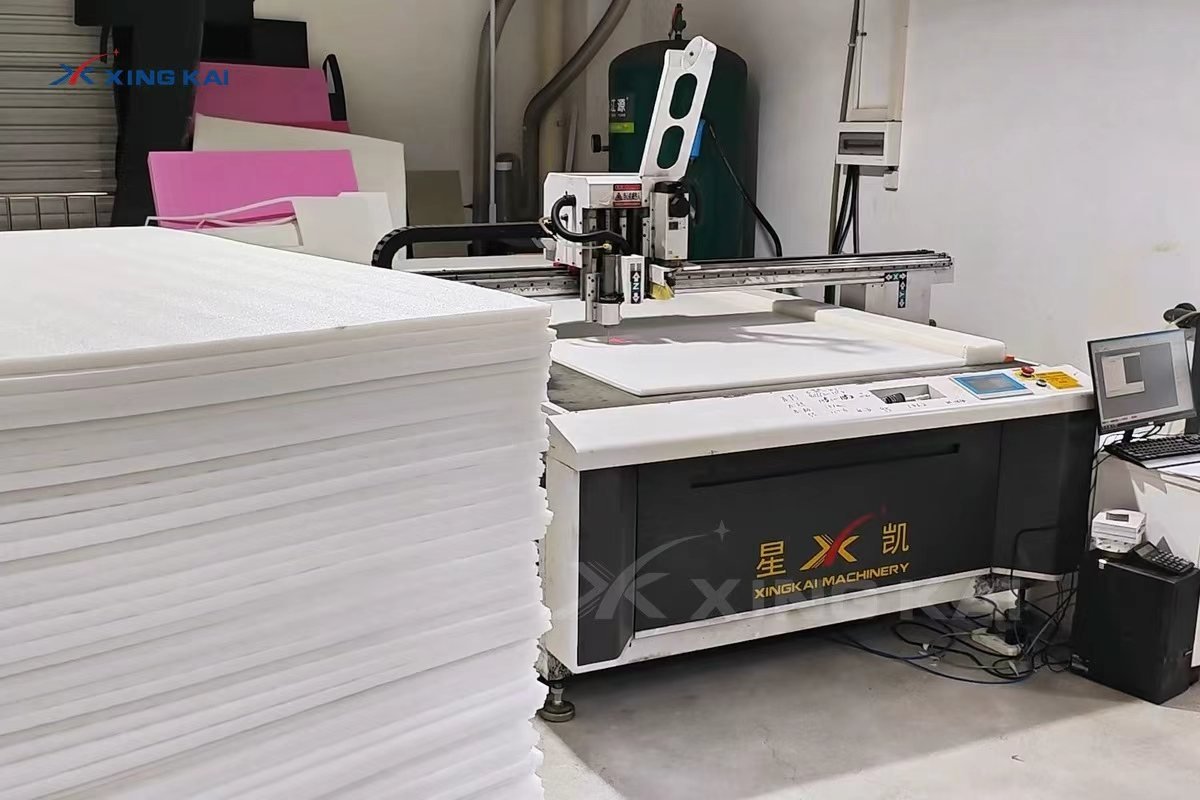
Choose the cutting table size around the EPE sheets you regularly process, then confirm the thickness range, expected part geometry and daily volume. For packaging work, vacuum holding and a tool configuration proven on your own samples are more useful than choosing a machine by a single generic specification.
Explore the EPE Foam Cutting Machine for Pearl Cotton Packaging or the broader CNC Foam Cutting Machine range. For packaging applications, see CNC Cutting Solutions for Packaging and Corrugated Board.
Frequently Asked Questions
Can an EPE foam cutting machine make packaging cavities?
Yes. The cutting file can include outer profiles and internal openings for custom protective packaging inserts.
Is CNC knife cutting suitable for small packaging orders?
Yes. It is useful for samples, customized inserts and changing product designs because a new physical die is not required for each revision.
What should be sent for a sample test?
Send the EPE material, thickness, sheet size, product dimensions and a cutting drawing or packaging requirement.
Request an EPE Foam Cutting Test
Send your pearl cotton sample, thickness, sheet size and packaging drawing for configuration advice and sample cutting.

